What drew you to LARGO as a producer, and why did this story resonate with you personally?
I was first attached to the project in 2018, when it was a very different story set in Sardinia. For better or worse, we weren’t able to raise the funds at the time. Fast forward to 2022, the writer/directors reached out again ahead of pitching to be a part of Slick Films slate. The script had evolved, now set in a working-class fishing town in the UK, and I was immediately drawn to the new direction. It felt timely, urgent, and resonant.
I knew I could contribute both narratively and by connecting the project to a growing network I’d built across the industry and the charity sector. Much of my work as an actor, writer, and producer leans toward activism through the arts, and LARGO aligned with that ethos.
What struck me most was how the story approached the refugee experience in reverse. A child, alienated by the hostility of the local community, builds a boat to try and return to the war-torn country he fled. It’s a bold, poetic inversion. Set against the backdrop of post-Brexit Britain, a country battered by over a decade of austerity and a political agenda that scapegoat’s refugees (except, notably, those from Ukraine), LARGO felt like a story that cut through the noise. It reminds us that refugees often have more in common with the working class than with those pitting us against one another.

As a British-Arab creative, how did your identity and background influence the way you approached producing this film?
Salv and Max wrote a powerful script and had a clear vision. Salv drew on his own experiences of arriving in the UK as a six year old who spoke barely any English, while Max grew up surrounded by the kind of views the locals in the film express.
Still, I felt a responsibility to ensure the story’s authenticity, especially around how Musa is othered. Growing up in an Arabic speaking household in small suburb in Kent, I knew that experience all too well. My first contribution was to add cultural nuance to the script, things that might not have been on the team’s radar, particularly from a religious or cultural point of view.
From there, I helped with casting. I had worked with Ammar Haj Ahmad (from The Jungle), and he became an invaluable part of the process, almost a consultant for the Syrian elements of the story. He himself fled Aleppo in 2011.
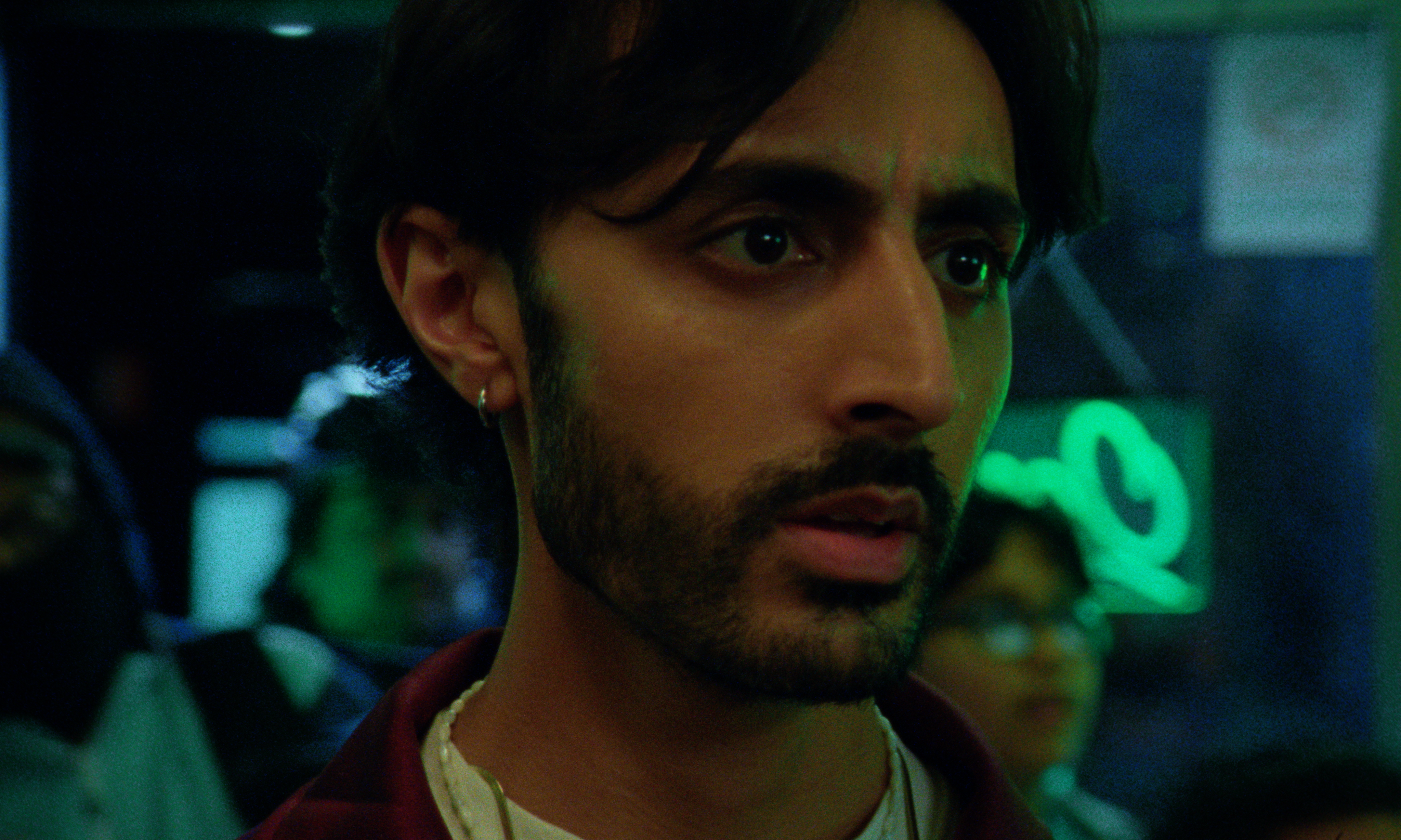
Most significantly, I’d known of Zack Elsokari and immediately pitched him for the role of Musa. The directors rightly ran a nationwide search with casting director Nick Hockaday. They saw just about every actor who fit the brief. But all roads led back to Zack, and he landed the role, with a little encouragement from me.
We were also lucky to bring in Mohamed El Manasterly as our editor, a double Emmy winner and Oscar nominee. Having someone of his calibre take on such a crucial role was a huge coup. Mohamed is one of those rare talents who is celebrated both in Hollywood and in Arab cinema.
We also had Oud player Rihab Azar, under the stewardship of Stuart Hancock, on the soundtrack, and esteemed actors, Waleed Elgardi and Houda Echouafani, who is also Zack’s mother and acting coach, playing Musa’s parents.
And from Slick we had Mustapha Wehbi as an Executive Producer, making sure everything was running smoothly. It was a deeply collaborative process, enriched by Arab talent throughout.
What were some of the biggest production challenges in bringing Musa’s journey to life, especially with the boat-building sequences?
Managing a cast and crew of over 40 people was a major challenge in itself. I agreed to take on the project on the condition that I could bring in my longtime producing partner, Charles Meunier of Plan Nine Pictures.
From the start, we knew we’d be asking people to work for a fraction of their usual rates, a harsh reality of short film production, so we focused on assembling a team who genuinely connected with the film’s themes.
We also launched an apprenticeship scheme for displaced creatives, which meant we needed to be sensitive to those with lived experience on set. The result was a unique culture, collaborative, purpose-driven, and respectful. People still tell us what a joyful set it was.
The most demanding part was the third act at sea. Working with the elements is always a gamble. We brought in Roy Taylor, a Brit School friend of mine and one of the top stunt coordinators in the world (How to Train Your Dragon, Barbie, Judy). Roy led our second unit at sea, alongside our excellent water team and camera operator Rich Stevenson. Their experience made the impossible possible.

This is a short film with incredible scope, emotionally and technically. How did you manage those ambitions within the constraints of the format?
We managed it through a combination of timing, collaboration, and a lot of favours. Shooting at the tail end of the writers’ and actors’ strikes meant we were able to access equipment and talent that might otherwise have been booked on major productions.
Panavision helped with gear, and many of our crew, some normally working on Hollywood blockbusters, were available and excited to work on something meaningful.
Chris Overton and Rebecca Harris-Turner from Slick Films were our guiding light. Their support and experience were invaluable. We also had early backing from The Refugee Council and Good Chance, who believed in the project from the outset.
This was a big budget short, and without the generosity of our private investors, especially Executive Producer Tony Schlesinger, we would’ve made a very different film. We explored every possible grant, fund, and foundation, but ultimately it was individuals who made it happen. We never lost faith in the story or the bigger vision. At one point, we were even naming script versions after budget airlines to luxury carriers. That’s how committed we were to making it work, at any scale.
The apprenticeship program for displaced creatives is such a powerful initiative. How did that come together, and what impact did it have on the production?
The idea came from a real need for authentic voices both on screen and behind the scenes. I’d seen a theatre initiative from Good Chance and Nimax called Behind the Curtain, where refugees and migrants worked as apprentices in live theatre.
I spoke to Naomi Pople at Good Chance and we asked, what if there was a film version of this? That’s how Behind the Scenes was born. I’m not sure the name stuck, but the concept certainly did. I’ve since seen similar models replicated elsewhere.
I won’t claim we were the first, but I do think we helped put the idea on the map. I’ll absolutely be including something similar in the impact budget for any future projects.
The program had a huge effect on our production. With people on set who had lived experience, the entire team approached the material with care. We all felt a duty to honour the stories of those who’ve risked, and lost, everything crossing the Channel.
How can the film industry better support refugee and displaced artists in a meaningful, long-term way?
That’s the million dollar question. I don’t pretend to have the perfect answer, but I do have some thoughts.
There’s a phrase in the disabled community, “nothing about us without us”. The same applies here. There’s a real risk of co-opting these stories without centring the people who’ve lived them.
The UK’s media landscape often reduces refugees to statistics, part of a fear driven narrative. Post-Brexit, that’s only worsened. But if filmmakers can champion storytellers from underrepresented backgrounds, whether they’re working class, refugee, LGBTQ+, Deaf, Blind, religious, then we start shifting culture, not just content.
Programs like Behind the Scenes are scalable, meaningful, and often eligible for tax incentives in some regions. More importantly, they help rebuild lives. I can say without hesitation that our whole team would rather live in a world where we extend a hand than one where we pull up the ladder behind us.

What was it like working with Salvatore and Max as first-time short film directors at this scale? What made them unique as collaborators?
It was the first time I’d worked with a directing duo, and it required a different kind of flexibility. Normally, as a creative producer, I’d be more involved in certain areas like script, tone, casting, but many of those roles were split between Salvatore and Max.
That said, my role naturally evolved to cover cultural nuance, talent outreach, and spearheading the apprenticeship and school’s programs.
What they lacked in experience, they more than made up for in clarity of vision. It’s quite something to look back at early storyboards and see how closely they match the final frame.
Interestingly, our producing dynamic mirrored theirs. Salv worked more closely with script and performance, Max with camera and crew, while I focused on creative and talent, and Charles managed logistics and finance.
What’s unique about Salv and Max is how fiercely they can disagree, and then arrive at a third solution that’s better than either of their initial ideas. No ego, no grudge. Just pure collaboration. I’ve heard Freddie Mercury and Brian May were like that, and we all know how successful Queen were.
LARGO is premiering at top Oscar and BAFTA qualifying festivals. What does that recognition mean for a socially driven short like this?
It’s a huge honour, though I haven’t had much time to dwell on it as the work continues well beyond the festival circuit.
Sadly, the story’s core issues aren’t going anywhere and will only grow more urgent with the climate crisis.
I hope the recognition opens doors, for the film to reach more people, for it to be screened in schools alongside the teaching resources we’ve developed, and for its message to resonate beyond the screen.
Laurels and accolades would be amazing, but they’re ultimately just tools, beacons, to amplify the core messaging behind the film, that refugees are just people too, not stats or numbers.
How do you hope LARGO contributes to the broader conversation around migration, childhood trauma, and resilience?
We hope it challenges the hostile rhetoric around migration by reminding audiences of our shared humanity.
We want it to foster empathy, especially among young people. If we can reach them early and build that empathy muscle, then perhaps tomorrow’s journalists, politicians, and storytellers will be better equipped to lead with compassion.