There are films that move you and then there are films like Holy Curse, that reshape the way you see the world.
When I first saw Snigdha Kapoor’s Holy Curse at a packed festival screening in Seattle, the theater was silent by the time the credits rolled. Not the kind of silence that follows polite applause. Its one that stunned, heavy, breathless kind of silence when a story hits too close to home.
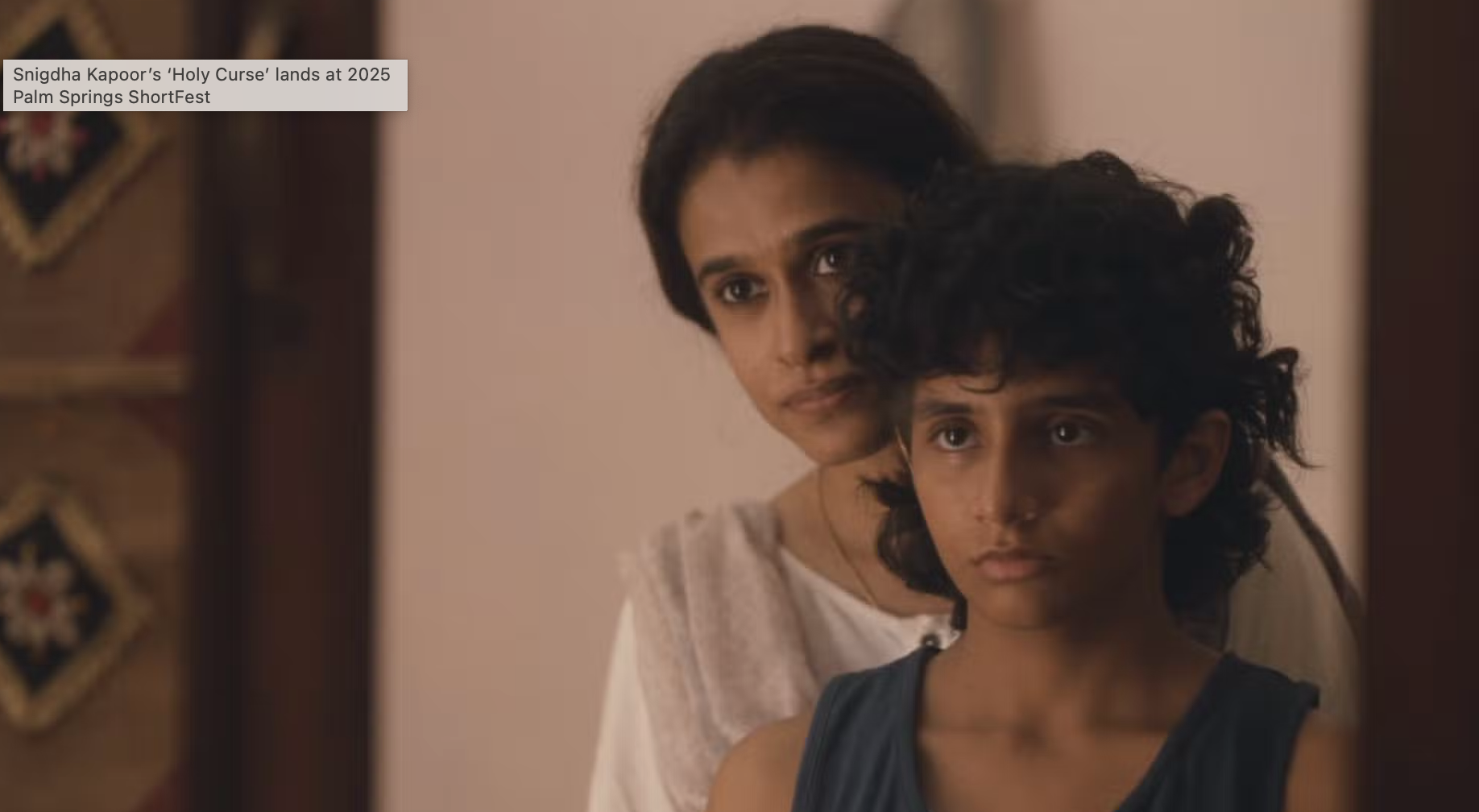
The film, anchored by the extraordinary performance of Mrunal Kashid as Radha, explores the friction between identity and belonging through the innocence of a child’s eyes. The brilliance of Kapoor’s direction lies in her restraint: she doesn’t lecture, she observes. We see rituals, laughter, shame, and curiosity all coexist in the same breath.
Cinematographer Juhi Sharma finds lyricism in everyday spaces: a sari swaying in sunlight, a metal basin reflecting water and tears, a cracked mirror that both distorts and reveals. The imagery doesn’t just support the story, it is the story.
At the heart of this short is a moment of profound grace. Without spoiling it, Kapoor crafts an ending that is less a conclusion and more a release of fear, of expectation, of self-denial. I’ve rarely seen a film so short accomplish so much emotional architecture in so little time
And let’s not overlook Lilly Singh’s executive producer role here. Her involvement gives Holy Curse both visibility and validation in an industry that too often overlooks short films as “stepping stones.” Here, Singh has aligned herself with something much more lasting; a work that stands shoulder-to-shoulder with the year’s most resonant features.
If Holy Curse goes on to win the Oscar® for Best Live Action Short, it will not be because it’s timely; it will be because it’s timeless.
Nolan Carr