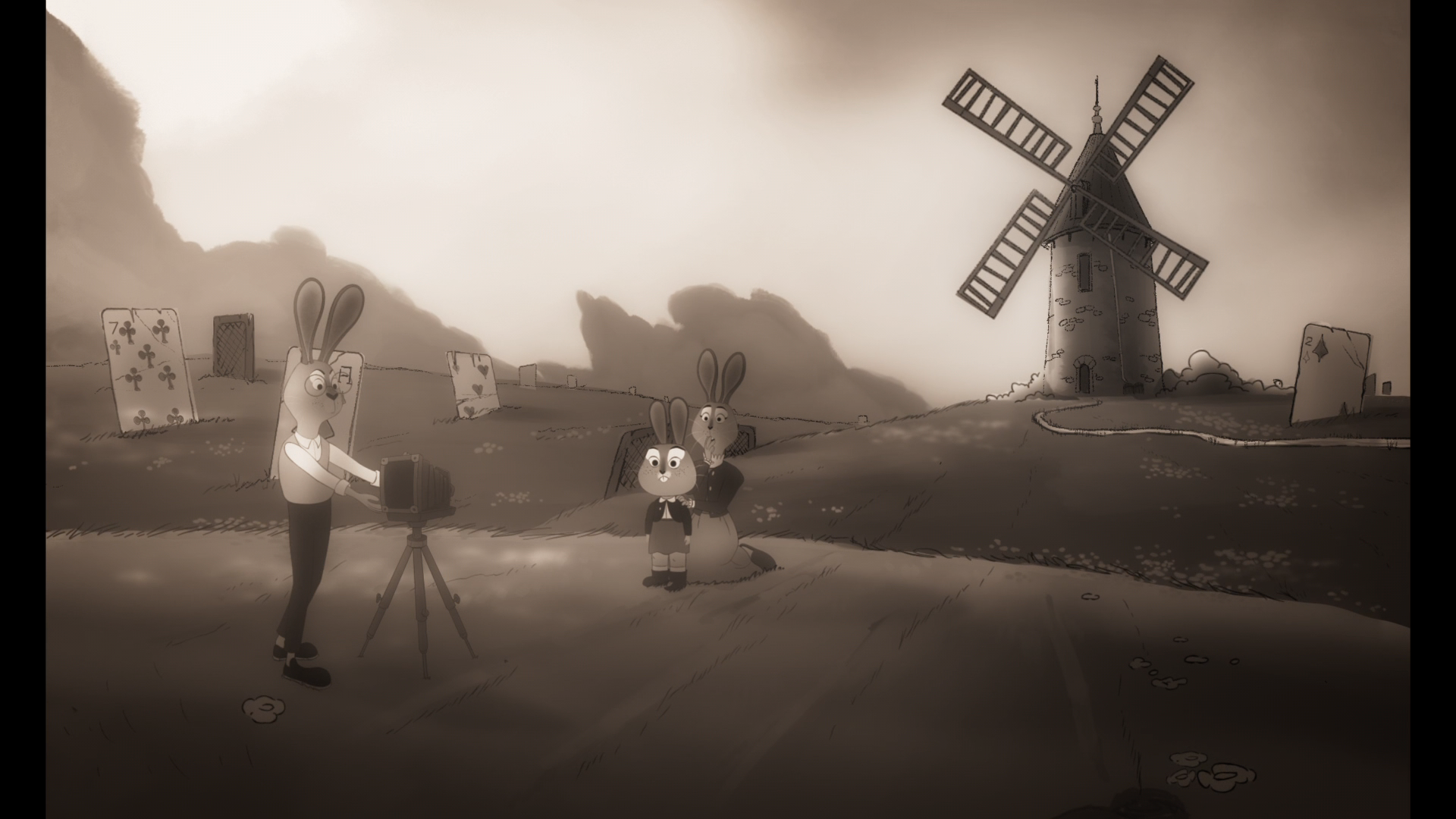
In Where Rabbits Come From, director Colin Ludvic Racicot crafts a deeply emotional narrative without his characters uttering a single word. This Oscar®-qualifying animated short proves that sometimes, the most powerful stories are told in silence. With no dialogue to guide us, the film relies entirely on its stunning animation and evocative classical score to convey the deep bond between a father and daughter, set in a bleak, dystopian world.
What stands out immediately is the film’s unique approach to storytelling. Without the use of words, Where Rabbits Come From invites the audience into the raw emotional landscape of its characters. The absence of dialogue could have left the story feeling empty or distant, but instead, it allows the animation and music to fill the void. The simple, yet intricate, gestures of the characters—the father rabbit’s comforting embrace, the daughter’s wistful glances—become the language through which we understand their pain, their hope, and their love.

The classical score, composed by the renowned Benoit Charest (The Triplets of Belleville), is an essential character in itself. The music breathes life into the animation, guiding the audience through the father and daughter’s emotional journey. Charest’s score is hauntingly beautiful, filled with melancholic melodies and gentle orchestration that perfectly complement the film’s mood. The music becomes a bridge between the audience and the characters, guiding us through their grief and moments of fleeting joy. It’s not just a soundtrack; it’s an emotional compass, pushing and pulling the viewer in sync with the emotional beats of the story.
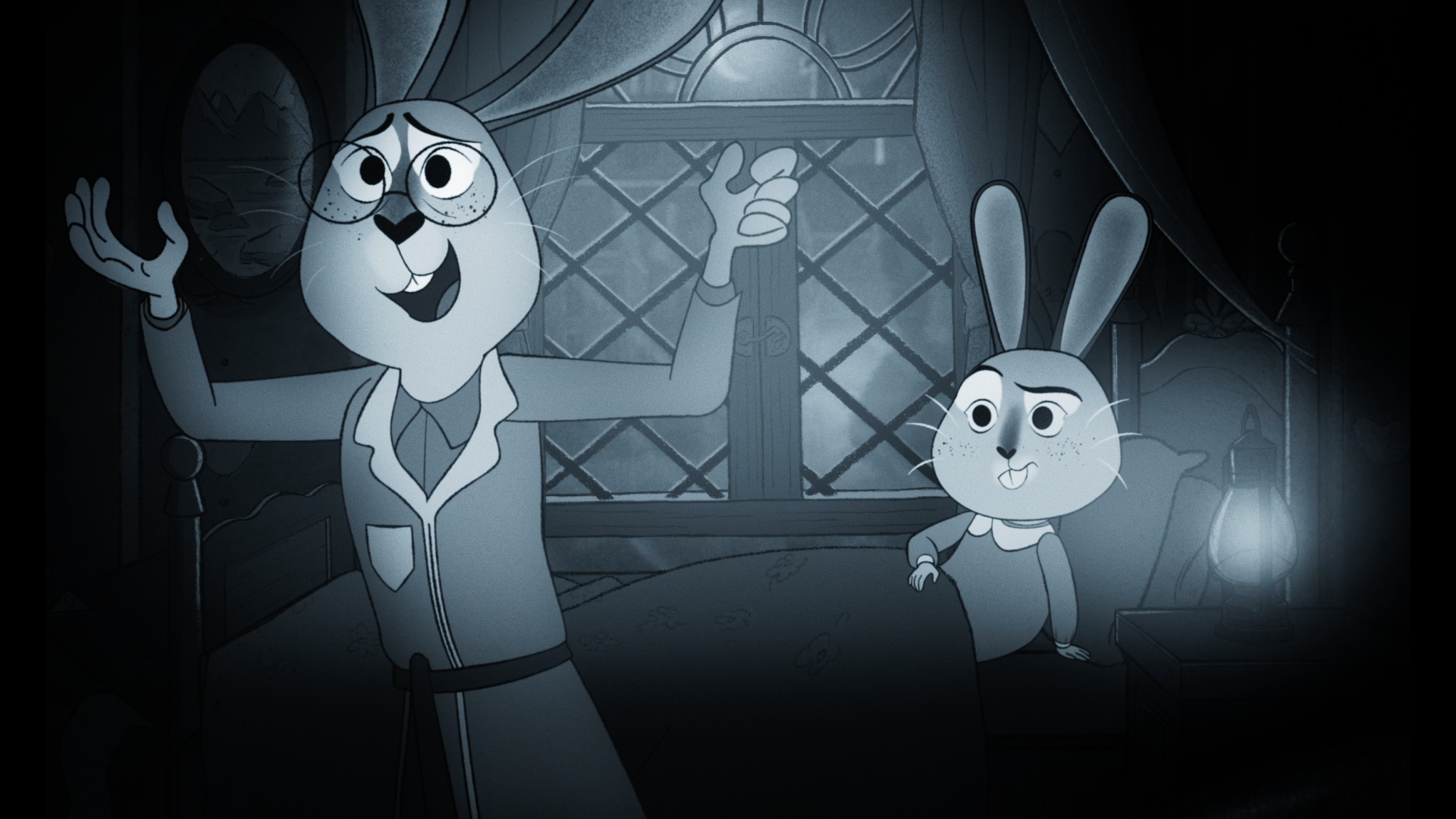
The absence of dialogue allows the music to become the film’s primary emotional driver. It swells during moments of tenderness, drawing us closer to the father’s longing for his daughter to experience wonder again, and it softens during the quieter, more reflective moments, underscoring the film’s themes of loss and longing. The score never overwhelms the animation but instead enhances it, allowing every note to breathe with the same depth and care as the hand-drawn frames.
The animation itself, with its simple yet expressive character designs, serves as a visual reflection of the emotional landscape. The father and daughter, drawn with warmth and softness, communicate through small, poignant gestures, relying on the visual storytelling to convey what would otherwise be said in words. There’s a fluidity to the animation, with characters’ movements almost dancing to the rhythm of the music. The environments they inhabit are also key to the storytelling, with the cold, industrial backdrop emphasizing the emotional isolation of the characters, while fleeting moments of warmth—often signaled by changes in the music—hint at the tenderness that still exists between them.
The decision to rely solely on animation and music—eschewing dialogue entirely—makes Where Rabbits Come From a uniquely immersive experience. The classical score plays a crucial role in this, acting as both a narrative device and an emotional conduit. The absence of verbal communication strips away any distractions, leaving only raw, human connection to guide the viewer. In this silent world, we don’t need words to understand the love and grief that permeate every frame.

What’s especially striking is how Where Rabbits Come From proves that animation, when paired with a thoughtful score, can become more than just a visual medium. It becomes a fully sensory experience, where music, movement, and silence speak louder than dialogue ever could. In a time when films are often heavy with words, this animated short reminds us that sometimes the most powerful messages come in silence, leaving space for the music and the visuals to say what cannot be put into words.
In the end, Where Rabbits Come From is a testament to the power of music, animation, and subtle storytelling. It’s a work that lingers long after the final note fades, inviting the audience to reflect on the emotional depth of what they’ve experienced—and all of it, without a single spoken word.
Written by Albie Boon

One response to “2025 OSCAR CONTENDER: WHERE RABBITS COME FROM A Silent Symphony of Emotion and Music”
[…] 2025 OSCAR CONTENDER: WHERE RABBITS COME FROM A Silent Symphony of Emotion and Music […]