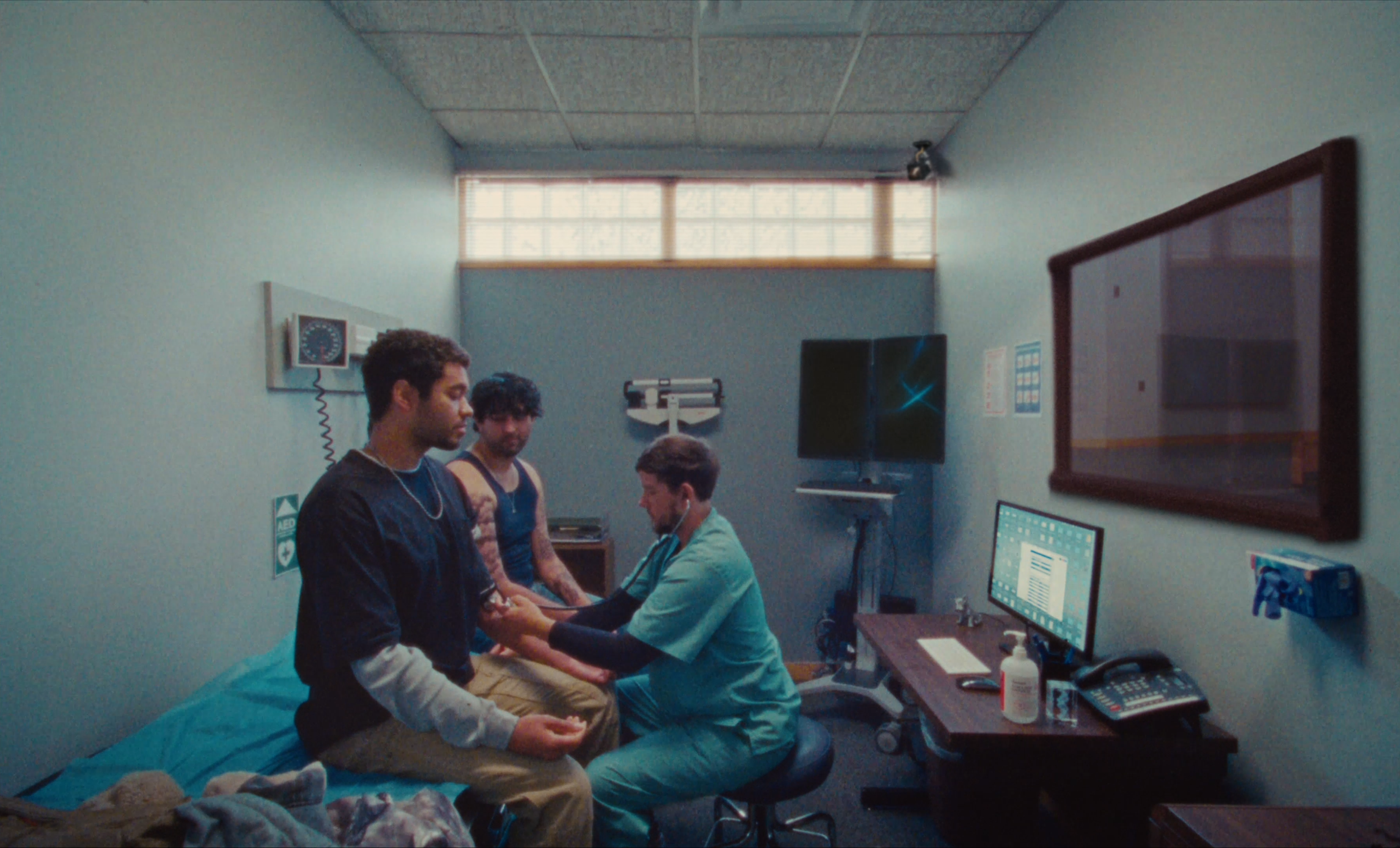
Jasmin Mozaffari is an emerging filmmaker known for her thought-provoking narratives and strong character-driven storytelling. Her short film, Motherland, delves into themes of identity and belonging within the context of the Iranian diaspora. Mozaffari’s work often explores complex emotional landscapes, with a particular focus on cultural displacement and generational trauma.
Her filmography includes notable works that showcase her ability to balance intimate, personal stories with broader social commentary. Mozaffari’s skillful direction and distinctive visual style have garnered attention, solidifying her as a promising voice in contemporary cinema. As she continues to gain recognition, Motherland further highlights her talent for creating deeply resonant, emotionally charged films. She took some time out of her busy schedule to talk to us about this incredible film.

How does it feel to have created the short film ‘Motherland’ which story you have such a personal connection with?
It feels quite special – although familiar. All my work is personal to me in some way, and I think it helps craft a better story when it’s a subject so near and dear to your heart. Of course, this film is not only an homage to my father, but also all Iranians who came to America in search of a better life and faced all kinds of hurdles. Because of all of this – Motherland is so important to me.
All my work is personal to me in some way, and I think it helps craft a better story when it’s a subject so near and dear to your heart.
Have your parents watched the film and what was their reaction?
My father passed away 11 years ago, so he never saw it. However, his brothers watched it and were quite moved. They felt it captured a lot of the anxieties of being Iranian in America at that time. My mother, who Katie is based off of, helped me develop the film in a way because I had to ask her what it was like to go through this time with my dad. She really loves the film.
I had to ask her what it was like to go through this time with my dad.
What challenges did you face portraying that conflict between the Iran Hostage Crisis in 1979 ?
I think the biggest challenge was to convey the high stakes of the situation, without making the film strictly about the Hostage Crisis. That certainly is the backdrop to the story, but the film is about the characters first and foremost. So I decided to give the archival footage only 30 seconds of screen time to give context to the audience, and then dive into Babak and his own story.
The biggest challenge was to convey the high stakes of the situation, without making the film strictly about the Hostage Crisis.
How did the actors prepare for the role, particularly dealing with themes like racism?
Well if you’re Middle Eastern, you don’t have to prepare much to understand racism because you’ve lived it. Certainly Behtash who plays Babak has had his fair share of racist experiences as a Middle Eastern actor (being typecast as a bad guy, or terrorist etc.) Overall for Behtash, Babak’s story felt very similar to his own, so the preparation was just speaking with me about my father’s experiences and getting a sense of what he felt at the time. For the other actors, it was a bit harder to have to embody racist assumptions and behaviour because it’s uncomfortable, however they felt it was necessary to get right.
Well if you’re Middle Eastern, you don’t have to prepare much to understand racism because you’ve lived it.
Can you discuss your choice behind the music?
Most of the music you hear in the film is by a famous pre-Revolution psychedelic rock musician named Kourosh Yaghmaei. Before the Revolution in Iran in the 1970s, he was very popular. After the Revolution he wasn’t allowed to make music in the same way anymore. For me, his music embodies the convergence of Iranian and American cultures perfectly – and that’s very fitting for this film. Also, the last song “Paaez” means “autumn” in Farsi. This song is about the loss of summer and going into the darkness of fall. I saw that as a metaphor for Babak’s journey ahead, and also for the dark period of American-Iranian relations that has lasted to this day.
Most of the music you hear in the film is by a famous pre-Revolution psychedelic rock musician named Kourosh Yaghmaei.
How did you work with Behtash Fazlali to shape Babak’s character arc?
I didn’t have to do too much to help Behtash into character. Behtash and my father have similar journeys in that they both immigrated to Canada and were raised by a single mother. Behtash really related to my father’s journey. The one thing Behtash got caught up on was being completely accurate to my father’s story. This actually became a barrier to fully falling into the character. I told Behtash at one point that he is not my father – he is a new version of Babak, and he should make the character his own. Once we released my dad, so-to-speak, everything flowed quite nicely.

What do you hope viewers take away from Babak’s journey and the cultural situation?
I hope non-Irananians become educated on what this time was like for Iranians specifically. There are a few films from the American POV of the hostage crisis inside of Iran, but none from the Iranian POV inside America. I hope it creates empathy not only for Iranians in 1979, but also a better understanding of how rhetoric can negatively shape our Western views of people from the Middle East. In the end, all humans want the same things: love, and to find our home. For Iranian viewers, I hope they feel seen.
In the end, all humans want the same things: love, and to find our home.
What role did cinematography play in capturing the mood and tension of the era?
It was super important we shot on Kodak 16mm film to capture the era’s mood authentically. I really wanted the film to feel like it was from the 70s, not a bad imitation of the 70s. Our references were gritty 1970s American cinema like DOG DAY AFTERNOON, and SERPICO. There’s so much tension in those films and so I borrowed from that – especially harsh night lighting, shadows, darkness, earth tones. But of course, the production design and costumes also helped capture the era as well.
I really wanted the film to feel like it was from the 70s, not a bad imitation of the 70s.
Will we see the next steps of your father’s journey in a feature length film?
I was writing a feature that was a bit of an extension of MOTHERLAND, but I’ve since abandoned it. I think making the short satisfied my exploration of this era and I’m moving on to writing something else about Iranian-Americans in a new genre.
What does the film say about the immigrant experience and identity crisis?
I think it says a lot of things. I think it mainly looks at how painful and tricky trying to assimilate into a new culture can be. You see the fun part of assimilation in the film – i.e. enjoying American movies and music, dating American girls, feeling a sense of new found freedom perhaps. You also see the dark side – the racism, the language barrier, the constant need to shrink yourself to make white people feel more comfortable. Hopefully it paints a full picture of how one must have to constantly shapeshift to try and fit in, and asks the question: At what cost?
I think it mainly looks at how painful and tricky trying to assimilate into a new culture can be.
You already won TIFF’s Short Cuts Award – How does it feel to move ahead to the Oscars 2025 with ‘Motherland’?
It feels amazing. I never thought we’d ever be here to be honest. However I’m super excited because I want more people to see it, especially in the US and I hope this push helps get more eyes on it.