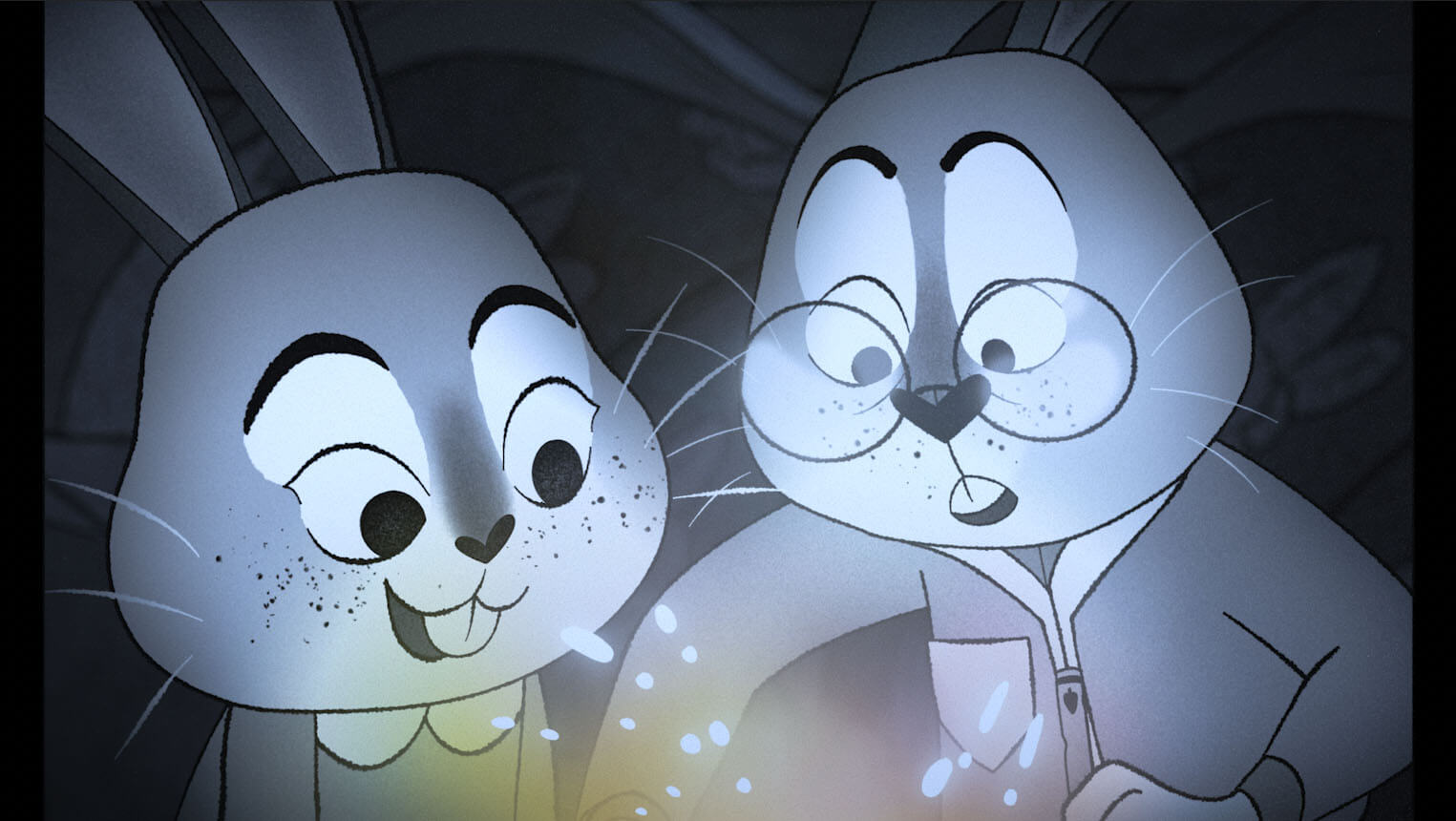
WHERE RABBITS COME FROM IS NOW ON PUBLIC RELEASE:
What inspired Where Rabbits Come From?
The inspiration for Where Rabbits Come From came from two main sources. One was my fascination with the world of magic, which has always felt mysterious and creatively stimulating to me. Magic in cinema is captivating, especially with animation. The possibilities seem boundless, especially since this is my first animated short.
The other was my journey as a father. Spending time with my daughter opened my eyes to the immense power of imagination and the deep connections that can form through simple moments of shared creativity, like drawing together. These two themes—magic and the bond with my daughter—came together to shape the story and world of the film.
The film relies heavily on the subtle gestures and movements of the characters to convey their emotions. What was the process like for the animators to capture such delicate, expressive details in the characters’ body language?
One of the most rewarding aspects of the process was discovering how each animator brought their own unique style to the characters. It was humbling to see their individual approaches to animation and acting, which opened up possibilities I hadn’t initially considered. After storyboarding, the animators did basic posing and proposed ideas with rough animations—things I hadn’t thought of—that brought originality and fresh perspectives to each shot. Rather than directing with a rigid vision, we explored how each animator’s style fit particular scenes, helping bring out different emotional layers. It was a truly collaborative effort, and I was there to guide and support their creativity.
A memorable moment for me was the scene where the father tries to explain what he witnessed, using big, almost cartoonish gestures. It was a delicate balance, but we intentionally infused humor into this moment. The exaggerated movements lightened the mood, adding a touch of comedy in an otherwise emotional scene. I was grateful to see how the animators brought this idea to life in ways I hadn’t fully imagined.
In many respects, I approached directing this film as though it were live-action. I carefully planned each shot and sequence with a focus on natural, organic movement, as if we were capturing real performances. The animators’ ability to convey emotion through body language and subtle gestures was something I had to learn to trust, and it’s something I’m really proud of. Their contributions were crucial in making the film feel alive and emotionally resonant.

How did you approach the character design of the father and daughter rabbits, particularly in making them relatable and emotionally engaging despite their anthropomorphic appearance?
It was an ambitious undertaking, especially considering the film’s length and the number of shots and characters. We decided on a mix of 2D rigged animation and traditional animation, with Toonboom joining us in the process to ensure we had all the tools necessary to bring our vision to life. This hybrid approach allowed us to achieve a natural flow in the characters’ movements, reminiscent of classical 2D animation, and I believe we found the right balance.
For the character designs, we wanted a look that felt both relatable and appealing, while maintaining a certain seriousness. The characters had to convey a range of emotions, from the somber, everyday expressions to the more unexpected moments of happiness. The design team had fun creating variations, and we worked together to narrow it down to a final design that felt creatively stimulating and, most importantly, would resonate with the audience, without becoming too cartoonish
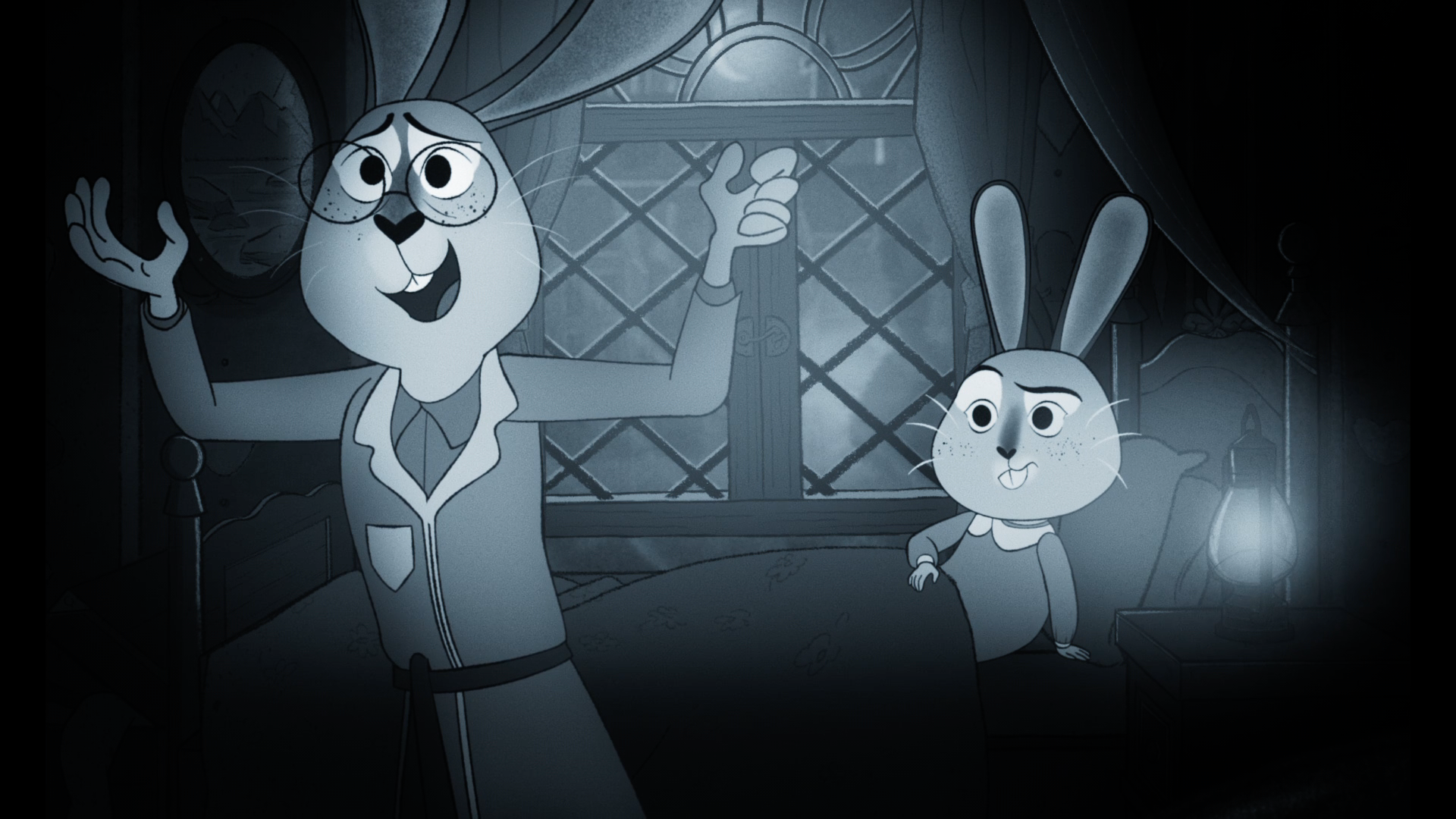
The notion of “magic” appears in the film in subtle ways. What does magic represent for the characters, and why is it such an important element in a story about loss and emotional survival?
Magic, in Where Rabbits Come From, isn’t just about spectacle—it’s a metaphor for the power of imagination and hope. For the father and daughter, magic becomes a way to cope with loss and a path to healing. In their somber world, magic represents the possibility of joy, of finding light in the darkest of times. It shows that, even in a world where imagination is suppressed, there’s always room for personal transformation. The magic is not only external but an internal force that the characters harness to navigate their grief and find emotional survival
Were there any particular influences or references that shaped your approach to the music for this film?
Music played a crucial role in bringing the emotional depth of the story to life, especially given the absence of dialogue. My influences came from legendary composers like Ennio Morricone, whose emotive style greatly impacted how I envisioned the score. Collaborating with Benoît Charest was a dream, as I had long admired his work on Les Triplettes de Belleville. I encouraged him to draw from Morricone’s powerful, evocative style, and the result was a score that mirrors the emotional journey of the characters. Music became the voice of the film, articulating emotions that words could not express, adding layers of depth and meaning to the visual storytelling

One response to “2025 OSCAR CONTENDER: Interview with Colin Racicot director of WHERE RABBITS COME FROM”
[…] 2025 OSCAR CONTENDER: Interview with Colin Racicot director of WHERE RABBITS COME FROM […]