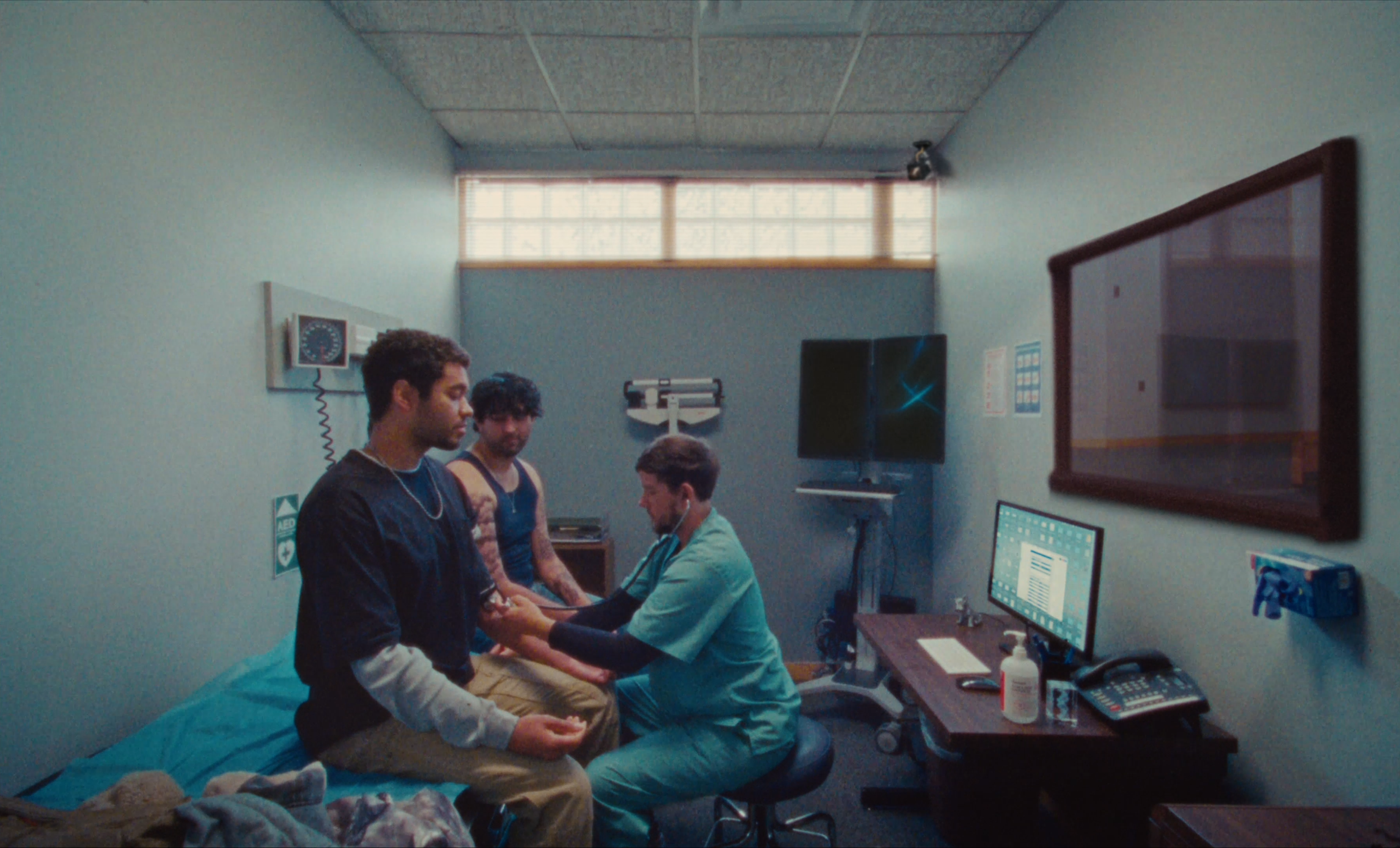
Mushroom Dad is both surreal and deeply personal. What was the first spark of the idea, and how did it grow into the story we see today?
The initial spark for the film was both the very silly, but also deeply poignant idea of “what would it be like if you had to take care of your parent on psychedelic mushrooms?” The initial concept felt inherently comical but at the same time, for many folks in our generation who have dabbled in mind-altering substances and found catharsis, there was a deep wish fulfillment in being able to share that experience with our parents, many of whom feel to be holding back certain emotions or burdened by trauma. I think so many of us want our parents to experience that feeling of freedom or release.
Simultaneously I had been wanting to capture what it was like watching my father cry for the first time and how so deeply connected I felt to him in that moment, and it felt like there was a possible marriage between these two seemingly separate ideas- with the former leading to the latter, and that kicked off the writing process.
You’ve mentioned the film reflects your own relationship with your father. How did you navigate drawing from real life while still creating fictional, comedic moments?
My father was the inspiration for Paul, the father in the film, but of course the film is entirely fictional and all the scenes and shenanigans that unfold were completely invented. I’m lucky that my father and I are really close at this point in our lives, so thankfully we don’t need an accidental mushroom dosing to bring us together- and Paul’s playful behavior in the film and his attempts to “fix” his son’s “bland” dish made sense for this particular narrative set in a kitchen, but I’m not entirely sure my actual father would behave the same way (though it’d be fun to find out).

Why was comedy the right vehicle for exploring heavy themes like generational trauma and immigrant identity?
Because it’s fun to laugh! To be honest I had never done a comedy before so it certainly felt like I was wading into unknown waters, but it felt right to sugarcoat the pill and surprise audiences with the pathos rather than leading with the heavier themes.
The premise hinges on a psychedelic accident — how did you balance the absurdity of that with genuine emotional stakes?
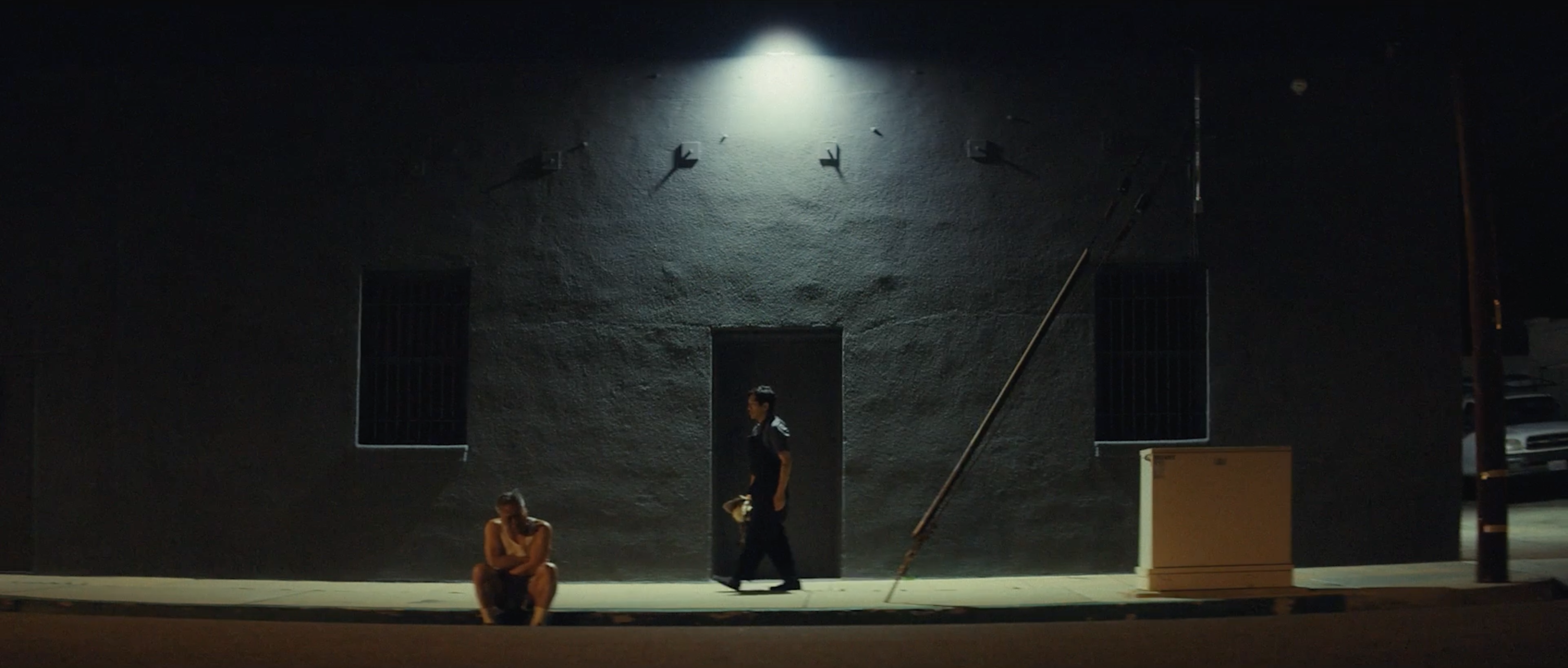
The North Star for us was always that climatic scene on the sidewalk where the son comforts the father, so knowing that we had to get to that place of emotional honesty was a helpful guide throughout the process. Ultimately the film is really about Julian, the son, seeing his father in a new light- so all the absurd situations along the way were crafted to erode the walls between how Julian saw his dad BEFORE, and then AFTER the accidental dosing.
Can you walk us through your visual and tonal approach to the “surreal” sequences?
Because this was my first foray into comedy, I knew that I wanted to create a film that relied less on one-liners or punchlines and more on situational comedy. My background in fiction has always been in drama or thrillers- so we really treated the film as if we were making something serious, the key difference was just the situations our characters were finding themselves in. A huge reference for my wonderful DP Mike Maliwanag and me was Punch Drunk Love, and we just really loved the way Paul Thomas Anderson and his team used the movement of the camera and the distortion of the anamorphic format to create a sense of heightened reality. Music was massive as well, and my incredible composer John Carey found this perfect balance between whimsical and chaotic that helped create the momentum that drives the film.
Were there any scenes that were especially challenging to shoot from a technical or emotional perspective?
My favorite scene in the film is the one in the storage closet and we made the decision to shoot it all in one shot, without coverage, which forced us to really hone in on the emotions all within each take. Without editorial tricks to lean on, it really forced the actors and I to find the right tenor and tone within the scene, and if I do say so myself I think they knocked it out of the park.
Later on- the scene where the father cuts his hands on the wine glass was a big concern and took a lot of planning during pre-production cause it was also shot in a oner and we had about three dozen extras and a steadicam and a limited number of breakable wine glasses- but the actors, my production team and remarkable AD Becca Weston made it an absolute joy when it came time for execution.
How did Lena Waithe and the Hillman Grad team influence or support the creative process?
The entire Hillman team was remarkable- from script notes all the way to post- they gave sharp and insightful notes that really helped hone in the story- but at the same time they were always there to support the vision and make the film that I wanted to make. I could not have imagined or wished for better creative collaborators on this project.
What role did the Indeed Rising Voices program play beyond just funding?
The Rising Voices program is truly a unicorn in our industry. In addition to the remarkable resources they provide for production, they also connected us with incredible mentors- helped with festival submissions and marketing, and also brought us out to NYC for a once-in-a-lifetime premiere week at Tribeca. There truly is nothing else like this in our industry and it’s honestly a miracle that it has existed for so long and created so many incredible films. Furthermore, all the folks at Indeed are true movie lovers who were really there to support us as filmmakers. I am so eternally grateful to the entire program for this opportunity.

How was your collaboration with the cast in bringing the nuanced father-son dynamic to life?
My incredibly talented casting director Tanya Giang did an amazing job at lining up an all-star cast for our film. Everyone- from Lawrence Kao and Kelvin Han Yee, our leads, to Adam Faison and Michele Selene Ang- are working professionals who have dozens of credits across film and TV. The beauty of working with folks who have this kind of experience is that they nail it on the first take, which allowed us so many more opportunities to play and improvise and explore different possibilities for each scene, which is perfect for comedy. In regards to the father-son dynamic- Lawrence, Kelvin and I just had a lot of conversations about their characters’ relationship, their history- and we also chatted a bit about our own relationships with our fathers. At the end of the day though- it was really Lawrence and Kelvin who did the work and built that chemistry which shines so brilliantly on screen.
What do you hope audiences — particularly those from immigrant families — take away from Mushroom Dad?
I’d love for the film to inspire audiences to reconsider their relationships with their own parents. For them to reach out and seek moments of emotional clarity or connection. I don’t think you need psychedelics to catalyze meaningful conversations with the people who are important in life (I certainly didn’t), and so I hope folks can walk out of the film and pick up the phone to call their dad, mom, brother, sister or friend.
The film has already premiered at Tribeca and now screens at HollyShorts. Have reactions differed between festival audiences?
The reactions have been great! They’ve both been great audiences and it’s been fun to see what people do and don’t laugh at. There are comedic beats that we didn’t even intend to be funny which have garnered massive laughs in both crowds.
Did making this film change your own understanding of your relationship with your father?
I was lucky to have found a lot of catharsis and understanding with my father prior to making this film- so in a lot of ways MUSHROOM DAD is actually a reflection of the emotional journey we’ve been on for the last ten years or so. It’s a culmination of what we’ve already been through and hopefully he feels honored by the film.

You’ve had success in both documentary and narrative filmmaking. How did your documentary background influence the making of Mushroom Dad?
The feature documentary I made was actually about a restaurant so it was a perfect return to a setting I was already super familiar with. I had already had experience in moving around and filming in a kitchen- and about how to shoot food and cooking. Furthermore documentaries really force you to be nimble and adaptable and hyper focused about what’s necessary for the edit, so I tried to bring a lot of that experience into this film, and being economical about coverage.
What does being part of the 2025 Indeed Rising Voices cohort mean for you at this stage in your career?
Getting to make ANY film is a blessing, and getting to make one with the resources and support that Rising Voices provides is truly a dream come true. It’s allowed me to explore an entirely new genre and exercise different muscles, and given me confidence as I tackle my first fiction feature. The program also carries so much weight given its tremendous reputation, and has been a powerful co-sign and badge of honor.
With your feature-length fiction debut in development, should we expect a similar blending of surrealism and emotional honesty?
I hope so!