In a year when the boundaries of cinematic storytelling were pushed further than ever, the world of short films emerged as a vibrant frontier of creativity, urgency and elegance. At We Love Short Films, we have journeyed through festivals, online premieres and hidden gems to gather the most compelling, provocative and beautifully made works of the year.
From bold animations to intimate drams, the picks below chart a landscape where fewer minutes do not mean lesser impact, but rather a sharper, richer emotional punch. These are the short films that linger long after their runtimes, that spark a conversation, turn a glance into a question and invite us to lean in just a little closer.
So, without further ado, dive into our curated list of the standout short films of 2025—each one a manifesto for the power of a brief form to tell big stories.
LIVE ACTION SHORT FILMS
Olive — Dir. Tom Koch
Tom Koch’s Oscar-qualified short film OLIVE is a quietly devastating yet deeply tender meditation on love, memory, and the cruel distortions of Alzheimer’s. Fronted by Academy Award nominee and Golden Globe winner Lesley Ann Warren, the film is elevated by her haunting, lived-in performance, a reminder of why she remains one of cinema’s most compelling actresses.
Koch, who previously earned recognition for his debut Orange, directs with remarkable restraint, allowing the silences and fragmented recollections to carry as much weight as the dialogue. Warren’s portrayal captures both fragility and resilience, embodying a woman clinging to fragments of identity as her sense of self slips away. Alongside her, Marie Louise Boisnier and Jeffrey Farber provide quietly affecting support, while Tómas Doncker’s presence adds a soulful undercurrent.

Money Talk$ — Dir. Tony Mucci
Tony Mucci’s MONEY TALK$ is nothing short of a masterpiece in short filmmaking, a bold, pulsating narrative set against the backdrop of 1981 New York City, the most violent year in the city’s history. In just a short runtime, the film delivers a sprawling, interconnected story centered around a single $100 bill as it travels from hand to hand, revealing the desperation, survival, and complicity of a city in crisis. This is storytelling with teeth, sharp, evocative, and relentless.
MONEY TALK$ isn’t just a film, it’s a snapshot of a society’s fractures, told with style, urgency, and a rare kind of cinematic courage.

Beyond Silence — Dir. Marnie Blok
Beyond Silence arrives as a cinematic revelation, a short film that transcends its modest runtime to deliver a deeply human story of pain, courage, and reclamation. Written and directed by Marnie Blok, the film stands as both an artistic triumph and a personal reckoning, offering a raw, poetic exploration of generational trauma and the radical act of breaking silence.
At the emotional core of the film is Henrianne Jansen, a deaf actress whose astonishing debut performance anchors Beyond Silence Unveiled in unflinching authenticity. Jansen does not simply portray silence, she inhabits it, transforming it into a living language.
Jansen’s performance is nothing short of transformative. In a landscape where representation of deaf and differently abled performers is still painfully rare, her role marks a significant breakthrough, one that feels both overdue and essential. There is a groundedness to her work that recalls the raw emotional precision of performers like Marlee Matlin in Children of a Lesser God or Millicent Simmonds in A Quiet Place, yet Jansen’s portrayal is wholly her own. She communicates with an intimacy that transcends dialogue, embodying the film’s central theme: that voice is not confined to sound.

The Truck — Dir. Liz Rao
Liz Rao’s The Truck arrives with the urgency of a headline and the intimacy of a diary entry. Set against the volatile backdrop of post-Roe America, the film follows a Chinese American teen and her boyfriend on a deceptively simple mission to buy the morning-after pill, a task that becomes quietly terrifying in a small town where choice is policed through whispers, laws, and looks.
Rao’s direction is strikingly assured for a debut. She builds tension not through spectacle, but through stillness, lingering glances, checkout counters, and the oppressive hum of fluorescent lights. It is a masterclass in restraint. Shirley Chen and Daniel Zolghadri deliver emotionally raw, quietly devastating performances that ground the political in the personal.

The Truck — Dir. Liz Rao
Ali Cook’s The Pearl Comb is an arresting, atmospheric short film that transcends genre boundaries, part gothic mystery, part historical drama, and wholly cinematic poetry. Set in 1893 England, it tells the story of a fisherman’s wife who performs an impossible act, curing a man of tuberculosis. What unfolds is a spellbinding battle between science and the supernatural, gender and power, truth and belief.
Visually, the film is a triumph. Cook, both writer and director, crafts a world bathed in mist and melancholy, every frame a painting that evokes the eerie beauty of a 19th-century ghost story. At its heart, The Pearl Comb is a meditation on resilience and rebellion. Drawing inspiration from the real-life Edinburgh Seven, the first women to study medicine in the UK, Cook explores how women’s voices were dismissed, their talents confined, and their knowledge feared.

Mercenaire — Dir. Pier-Philippe Chevigny
Pier-Philippe Chevigny’s Mercenaire is not just another festival darling, it’s a razor-edged moral inquiry that cements the Quebec filmmaker’s reputation as one of Canada’s most fearless contemporary storytellers. Officially qualified for the 2025 Academy Awards® in the Best Live Action Short Film category, the film’s growing momentum feels well-earned. Chevigny, whose debut feature Richelieu earned international acclaim at Karlovy Vary, Tribeca, and Palm Springs, once again demonstrates his command of cinematic tension and social critique.
The story follows David (Grondin), a newly released inmate seeking redemption after serving time for a violent crime committed under ambiguous circumstances. Through a social reinsertion program, he lands the only job available, working on a pig slaughter line. As he navigates the dehumanizing rhythms of industrial killing and the hostility of his co-workers, David faces an inner battle to suppress the violent impulses that once defined him. In a world where slaughter is normalized, Chevigny asks, how can anyone remain unscathed?

Snipped — Dir. Alexander Saul
With Oscar-nominated producer Rebecca Pruzan and multiple Oscar-winning producer Kim Magnusson behind it, Alexander Saul’s Snipped enters awards season with serious pedigree.
What sets Snipped apart is its daring mix of tone. The Academy often gravitates toward short films that balance social resonance with strong storytelling, and Snipped does exactly that. By weaving absurd humor into a deeply vulnerable ritual, the film avoids didacticism while still engaging with themes of identity, coexistence, and faith. It’s provocative without being polarizing, a sweet spot that voters often reward.
Saul’s personal stake in the narrative, drawing from his own experience as a Jewish convert, gives the film a layer of authenticity that distinguishes it from more formulaic Oscar hopefuls. His voice as a filmmaker feels fresh, distinctive, and confident, which could help the film stand out in a crowded field where many shorts chase the same social-issue template.

The Boy with White Skin — Dir. Simon Panay
In The Boy with White Skin, Simon Panay delivers an arresting and deeply human portrait of life in the gold mines of West Africa, where myth, survival, and sacrifice converge in haunting harmony. This OSCAR-qualified live-action short is not just a film, it’s a cinematic rite of passage that echoes long after the final frame.
Set within the suffocating depths of an artisanal gold mine, Panay’s 24-minute short introduces us to a young albino boy whose voice is believed to hold mystical power. Entrusted to miners by his father, the child becomes a spiritual conduit, a symbol of protection in a space where death is a daily companion. In this world, albino children are revered, feared, and mythologized. The boy’s haunting songs are more than mere ritual, they’re an offering, a lifeline, a tether to a belief system that shields against the void.

A Friend of Dorothy — Dir. Lee Knight
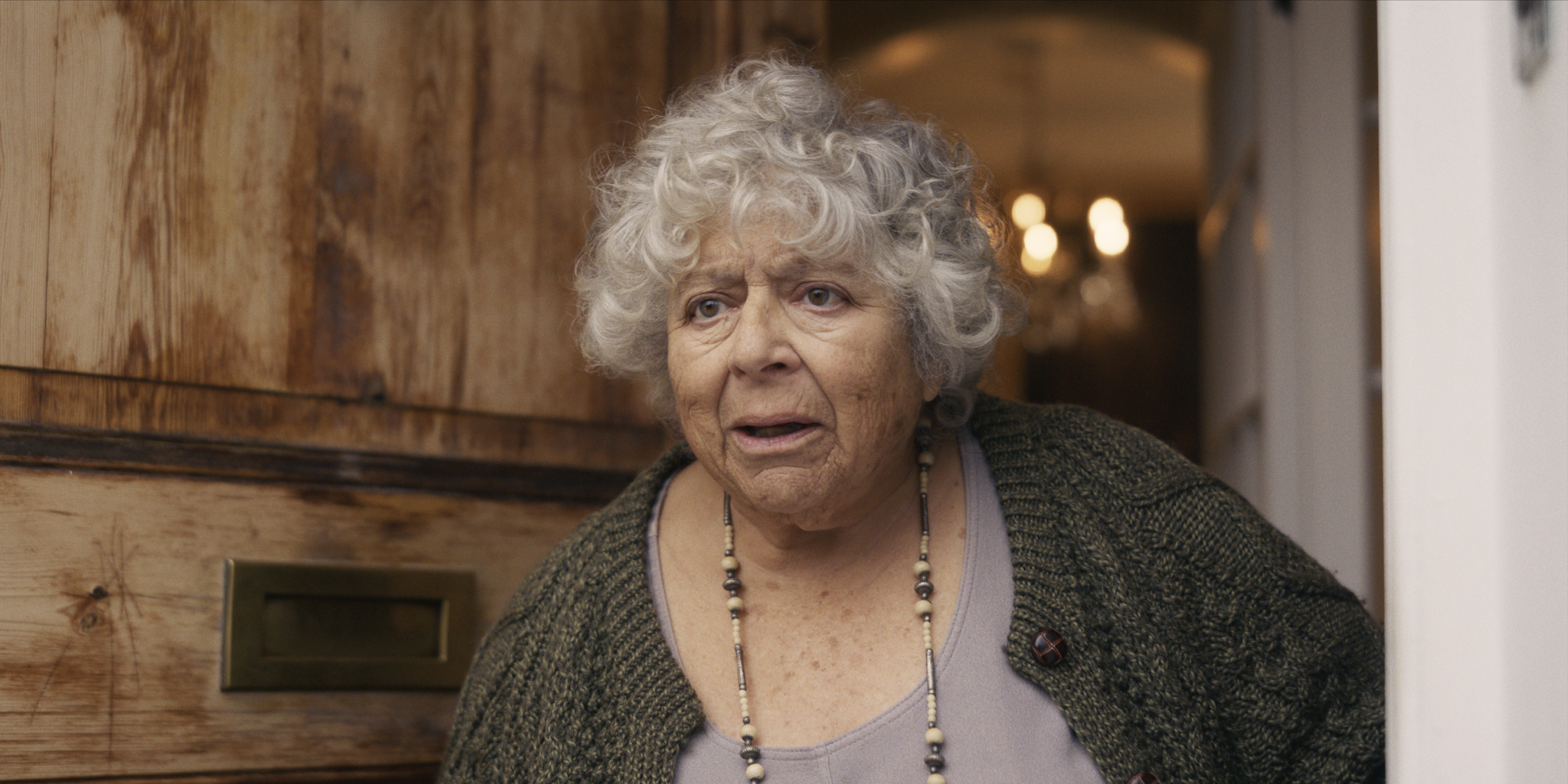
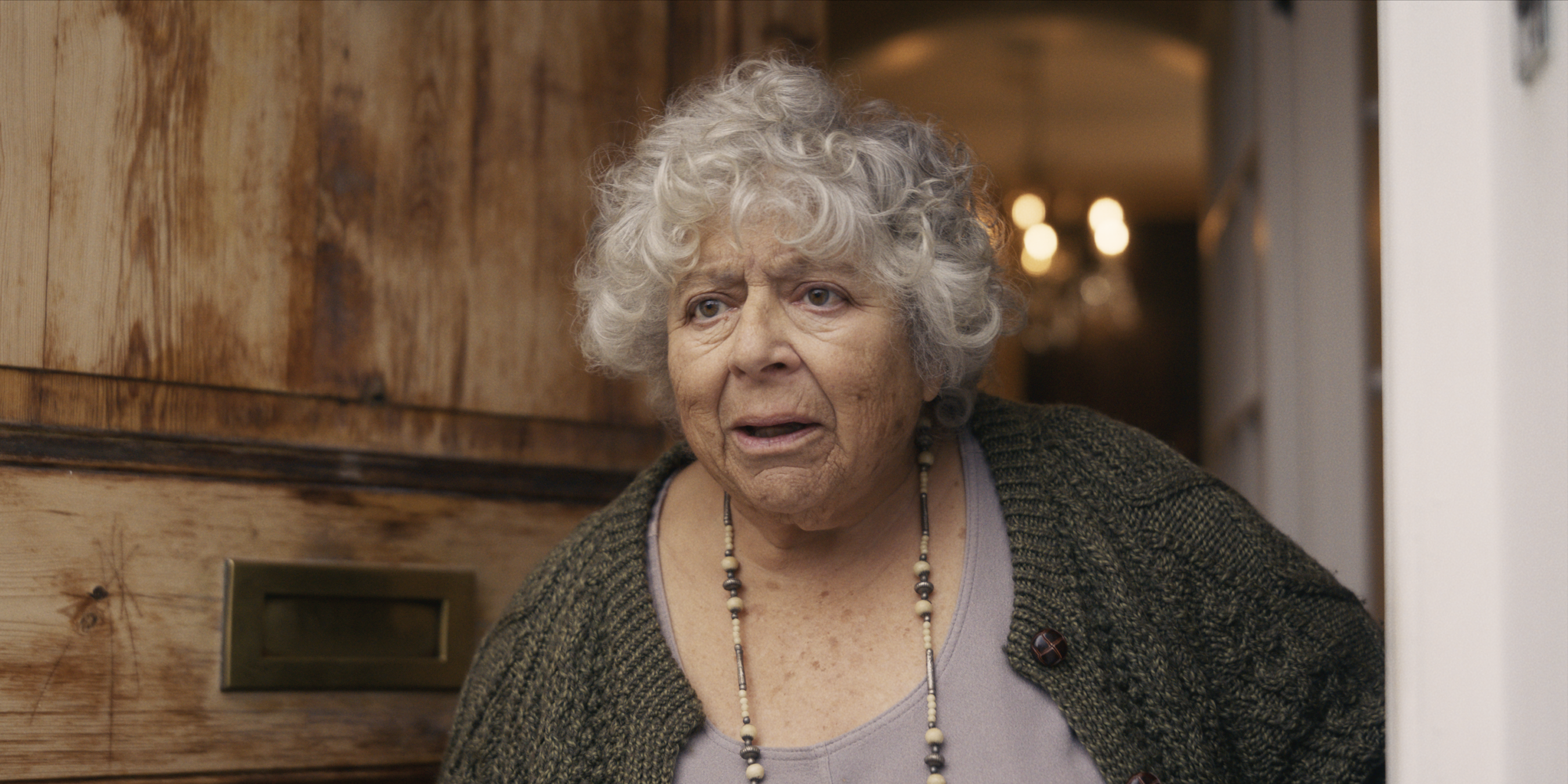
Lee Knight’s debut short A Friend of Dorothy demonstrates the assured touch of a filmmaker who understands restraint, nuance, and the quiet power of human connection. The film follows Dorothy (Miriam Margolyes), an elderly woman whose loneliness is disrupted by the playful persistence of JJ (Alistair Nwachukwu). Knight directs with an actor’s sensitivity, coaxing naturalistic performances that make their unlikely bond feel organic and unforced. He balances humor with melancholy, never overstating the drama, allowing Margolyes’ expressive silences and Nwachukwu’s youthful energy to play off one another with authenticity.
Already Oscar® and BAFTA-qualified, and with multiple festival wins including three Audience Awards and Best Directorial Debut at IndyShorts, A Friend of Dorothy is more than a calling card , it’s proof of a director with both vision and heart.

The Second Time Around — Dir. Jack Howard
Filmmaker Jack Howard, best known for his sharp comedic work as one half of the duo Jack & Dean, makes an assured and quietly haunting leap into drama with The Second Time Around, a fantasy-inflected short that marks his most mature and emotionally resonant work to date.
Set over the course of a rainy London night, the film centers on a young waitress (the compelling Hannah Onslow, This City Is Ours) who encounters a mysterious older woman (the ever-excellent Caroline Goodall, Schindler’s List, Hook) as she closes up a café. What begins as an ordinary closing shift slowly unfolds into something far more ethereal, a reflective dialogue on regret, memory, and the strange ways time can fold back on itself. If The Second Time Around is any indication, Jack Howard’s move into dramatic territory is not just a side-step but a full-fledged arrival. It’s a short that lingers, tender, timeless, and deeply human.

Walud — Dirs. Daood Alabdulaa & Louise Zenker
In this groundbreaking exploration of tradition and transformation, WALUD emerges as a powerful testament to human resilience and the complexity of cultural identity. This remarkable film transcends conventional storytelling to deliver an intimate portrait of life in the Syrian desert. At the heart of the narrative is Amuna, whose world shifts dramatically when her husband takes a second wife. Directors Daood Alabdulaa and Louise Zenker craft a masterful exploration of personal identity against the backdrop of cultural upheaval, creating a visual poem that speaks to both specific circumstances and universal truths.
The Oscar® qualification arrives as a testament to the film’s artistic merit and its ability to spark meaningful dialogue about cultural identity and personal transformation. In an era where authentic representation matters more than ever, ‘WALUD’ stands as a beacon of truthful storytelling.

Butterfly on a Wheel — Dir. Trevor Morris
In Butterfly on a Wheel, two-time Emmy-winning composer Trevor Morris makes a striking transition from scoring Hollywood blockbusters to directing a deeply personal, Oscar-qualifying short film. Set against Toronto’s vibrant cultural backdrop, the film is a tender, resonant exploration of mental health, artistry, and the universal human yearning to be truly seen. Butterfly on a Wheel is both an artistic triumph and a heartfelt statement.
At its heart is Jacen Davis (Curran Walters), a gifted jazz student at the Royal Conservatory of Music whose immense talent is shadowed by the invisible battles of OCD and anxiety. Walters delivers a sensitive, layered performance, portraying a young artist whose brilliance on the piano is at odds with his crippling self-doubt. The stakes rise as Jacen prepares for a performance at the prestigious Koerner Hall, where the possibility of triumph collides with the paralyzing weight of expectation.

Anngeerdardardor (The Thief) — Dir. Christoffer Rizvanovic Stenbakken
Christoffer Rizvanovic Stenbakken’s Anngeerdardardor (The Thief) was selected for the 75th Berlin International Film Festival in the Generation Kplus competition, where it electrified audiences with its fresh voice and raw emotional immediacy. Winner of the Best Danish Fiction Award at Odense International Film Festival 2025, the film is now Oscar-qualified, an extraordinary feat for the first short ever produced in East Greenland.
Born from true events in the remote East Greenlandic town of Tasiilaq, the film features non-professional Greenlandic actors and improvised dialogue, including a young performer from special education whose quiet intensity anchors the story. The result is a vivid portrait of adolescence at the edge of the world, told by a community rarely seen on screen. When Kaali discovers that his beloved sled dog has disappeared, his search ignites a chain reaction through Tasiilaq’s close-knit community. Navigating bullies and isolation, he sprints toward confrontation. In a place where belonging is everything, losing your only friend can break everything.

The Mourning Of — Dir. Merced Elizondo
With The Mourning Of, Merced Elizondo proves himself a director of rare precision and empathy. The short film, which has now officially qualified for the 2026 Academy Awards® after winning Best Live Action Short at the St. Louis International Film Festival, is both a deeply personal meditation on grief and a milestone for Latino representation on the Oscar® stage.
The film follows Maribel (Natalia Villegas), a young woman navigating the devastating loss of her mother through an unusual ritual: slipping into the funerals of strangers. What could feel like a narrative gimmick is, under Elizondo’s hand, transformed into a layered exploration of absence, cultural ritual, and the fragile bonds that tether families across generations. His direction is remarkably restrained, eschewing melodrama for quiet observation, yet the emotional weight lands with undeniable force. Each frame feels considered, intimate, and respectful of grief’s complexity.

Boyfighter — Dir. Julia Weisberg Cortés
At the intersection of bruised masculinity and aching vulnerability lies Boyfighter, a stunning short film that marks a vital new voice in cinema. Directed by Julia Weisberg Cortés and featuring a searing performance by Michael Mando (Better Call Saul, Orphan Black), Boyfighter is not just a film, it’s an emotional reckoning. With its world premiere at the Oscar®-qualifying HollyShorts Film Festival and its inclusion in the 2025 Indeed Rising Voices program, this film is already on a fast track to awards recognition, and rightly so.
Mando plays a retired bare-knuckle fighter confronting the physical and emotional legacy he’s passed down to his son. What could easily be a story of brute force becomes, in Cortés’ hands, a delicate exploration of pain, inheritance, and the fragile hope of redemption. Her direction is lyrical, yet grounded, a rare blend that evokes both the grit of The Wrestlerand the quiet intimacy of Moonlight. The film asks not just what men do to survive, but what they bury to stay standing.
There’s Oscar potential here and Mando delivers a career-defining performance, one that’s raw, haunted, and heartbreakingly human. His portrayal of a man trying to rewire himself emotionally after a life shaped by violence is nothing short of revelatory.

Mushroom Dad — Dir. Michael Yuchen Lei
Michael Yuchen Lei’s Mushroom Dad is an inventive, heartfelt short that blends surreal comedy with raw emotional truth. Backed by Lena Waithe and developed through the Indeed Rising Voices program, it’s a festival gem that premiered at Tribeca before heading to HollyShorts, earning praise for both its humor and poignancy.
The story follows Julian, a rising chef launching an ambitious new restaurant. The tension of opening night is compounded when his estranged father shows up unexpectedly and accidentally consumes psychedelic mushrooms meant for an experimental tasting course. What unfolds is an escalating night of hallucinations, unresolved grievances, and unexpected tenderness.
While the film delivers plenty of laughs, its greatest achievement is how it navigates complex emotional territory without sentimentality. Reconciliation here is messy and incomplete, which makes it feel real.

Trapped — Dirs. David & Sam Cutler-Kreutz
Trapped transforms the empty halls of a high school into a pressure cooker of class tension and moral peril. The story follows Joaquin (Javier Molina), a school janitor on the late shift, accompanied by his young son, while navigating the precarious demands of his job, but his routine takes a sharp turn when he stumbles upon a group of students preparing an elaborate and dangerous prank in the gymnasium, forcing him into a perilous game where the stakes quickly escalate
The film is David and Sam Cutler-Kreutz’s latest work, following last year’s Oscar-nominated A Lien. Like their previous short, Trapped blends sharp social commentary with character-driven drama, but here the suspense is cranked even higher. The pacing is lean and deliberate, building tension with every beat. What begins as an ordinary night of work soon unravels into a nightmare as the claustrophobic spaces of a school morph into a literal rat trap.

Largo — Dirs. Salvatore Scarpa & Max Burgoyne-Moore
Largo, is created by writer-directors Salvatore Scarpa and Max Burgoyne-Moore. With visual elegance and emotional urgency, LARGO tells the story of Musa, a young Syrian refugee in the UK, who constructs a makeshift boat in a fantastical quest to return home and find his missing parents. This is a film that lingers.
Told entirely through the eyes of its child protagonist, LARGO distills themes of grief, resilience, and imagination into a quietly searing journey. At the center is Zack Elsokari, in a breakout performance as Musa, balancing innocence and trauma with remarkable subtlety. Tamsin Greig, Ammar Haj Ahmad, and Kevin McNally lend gravitas in supporting roles, but it’s Musa’s inner world, fragile, determined, and haunting, that carries the narrative’s emotional weight.
With its poetic restraint, deeply moving performances, and child-centered perspective, LARGO is more than an Oscar contender, it’s a timely reminder of the power of hope, and the importance of seeing the world through a child’s eyes.

Holy Curse — Dir. Snigdha Kapoor
There are films that move you and then there are films like Snigdha Kapoor’s Holy Curse, that reshape the way you see the world. The film, anchored by the extraordinary performance of Mrunal Kashid as Radha, explores the friction between identity and belonging through the innocence of a child’s eyes. The brilliance of Kapoor’s direction lies in her restraint: she doesn’t lecture, she observes. We see rituals, laughter, shame, and curiosity all coexist in the same breath.
And let’s not overlook Lilly Singh’s executive producer role here. Her involvement gives Holy Curse both visibility and validation in an industry that too often overlooks short films as “stepping stones.” Here, Singh has aligned herself with something much more lasting; a work that stands shoulder-to-shoulder with the year’s most resonant features.

Highway to the Moon — Dir. Letitia Wright
BAFTA-winning actress Letitia Wright (Black Panther, Small Axe) takes a bold and breathtaking leap behind the camera with Highway to the Moon, a poetic, genre-defying short that cements her as not only a gifted performer but an emerging visionary director. Released worldwide on WeTransfer’s official YouTube channel, the film marks Wright’s directorial debut and arrives already carrying the weight of international recognition, Oscar® and BAFTA qualification, official selections at BFI London Film Festival and HollyShorts London, and a Best Sci-Fi nomination at the HollyShorts Film Festival in Los Angeles.
In just under 20 minutes, Wright establishes herself as one of the most promising new voices in British cinema. Highway to the Moon is not only a remarkable debut but a necessary film, one that speaks to the pain of a generation while reaching toward light

Key of Genius — Dir. Daniel Persitz
Daniel Persitz’s Key of Genius tells an inspiring true story of mercurial talent and the transformative power of mentorship. Adapted from Adam Ockelford’s acclaimed biography, the film dramatizes a pivotal chapter in the life of Derek Paravicini, a blind, autistic musical savant, and his teacher (Ockelford) who recognized and nurtured his extraordinary gift.
In its relatively brief runtime, Key of Genius wastes no time reaching its emotional core. Persitz crafts an intimate portrait of a teacher and his young student, capturing the moment Derek first encounters not just a tutor, but belief — an act of faith that becomes the foundation of his unfolding potential. One of the film’s most powerful achievements lies in how it redefines the very idea of “genius.” This is no simple tale of prodigy or innate brilliance. Persitz shows that genius flourishes only when talent meets patience and unwavering support.

Rise — Dir Jessica J. Rowlands
Jessica J. Rowlands’ RISE is more than an Oscar®-qualifying short film, it’s a profound act of cinematic courage that elevates Zimbabwean storytelling to the global stage. With unflinching authenticity and emotional clarity, Rowlands’ directorial debut transforms a true local story into a universal meditation on resilience, mentorship, and the power of hope.
Set against the sweeping backdrop of Victoria Falls, RISE follows the extraordinary journey of Tobias Mupfuti, a real-life boxing coach who channels his own difficult upbringing into saving vulnerable children from the same fate. Through his academy and orphanage, Mupfuti offers them not just shelter, but purpose, a message that feels both timely and timeless.

After Dark — Dir Iain Forbes
With his Oscar-qualified short After Dark, Scottish-Norwegian filmmaker Iain Forbes delivers a taut, unsettling study of human behavior in moments of crisis. The film’s premise is deceptively simple: a man, Kristian (Simen Bostad), encounters a distressed young woman, Mia (Billie Barker), late at night and agrees to walk her to the train station. What begins as a straightforward act of kindness slowly morphs into something far more ambiguous, where trust erodes and every glance, silence, and hesitation carries weight.
Forbes masterfully builds tension through intimacy rather than spectacle. The camera lingers in shadow and silence, forcing the audience to sit with the unease of not knowing whether Kristian’s empathy is leading him toward danger, or whether his fear is a projection of prejudice. In this sense, After Dark is less a thriller than a psychological mirror, reflecting the contradictions that emerge when instinct collides with morality.
Forbes, already a Student Academy Award winner with Revisited (2023), continues to prove his skill in crafting narratives that probe moral ambiguity.

Final Frame
If 2025 has proven anything, it’s that the short film form remains cinema’s purest laboratory — where risk is rewarded, voices are unfiltered, and emotion is distilled to its most potent essence.
These films remind us that brevity is not a limitation, but a canvas. The stories may be short, but their resonance is vast.