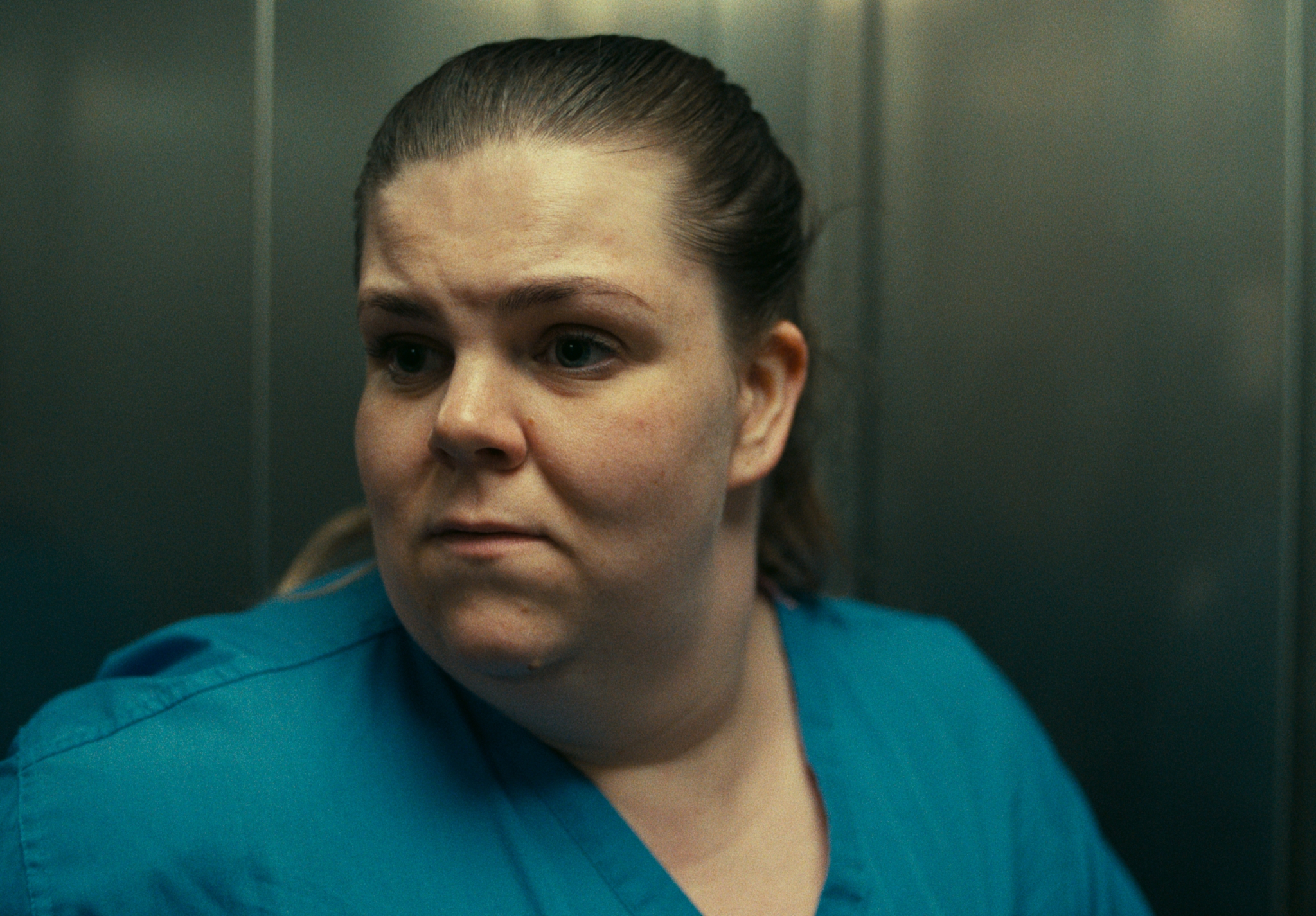
1. What was the starting point for MINE FOR A MOMENT, and what drew you to Cheryl’s story as a filmmaker?
The starting point was a news story I came across about a woman in Italy who disguised herself as a nurse and took a newborn baby from a hospital. She had convinced her husband that she was pregnant, and he was unaware that the baby she brought home wasn’t theirs. The baby was returned to its mother within 24 hours, but the story stayed with me. I couldn’t sleep that night.
What surprised me was how much sadness I felt for the woman who had committed the crime. In my imagination, I began to picture someone pushed to the very edge of desperation—someone who had perhaps struggled to conceive and reached a point where she felt all hope was lost. These were things I imagined, rather than things I knew about the woman herself, but I kept wondering what could lead someone to do something like that.
Around the same time, several people close to me had experienced miscarriages, and my own mother was also dealing with grief. Those experiences made the story feel particularly close to home. That became the starting point for Cheryl: wanting to understand the pain behind her actions, and whether we could still feel compassion for someone who does something unforgivable.
2. How did you approach writing Cheryl’s character so that her grief and desperation could develop naturally throughout the film?
I spent a lot of time trying to get inside Cheryl’s head and map out how her emotional journey could unfold naturally within a short film. A big part of that was understanding her isolation. Her partner works overseas and is away for months at a time, so she is navigating the miscarriage and her grief largely alone. I felt that loneliness was essential to understanding how her desperation grows.
When writing her, I tried to stay with her perspective without judging her. She desperately wants to be a mother, and after repeated losses, that longing and grief push her towards crossing an unthinkable line. I wanted each step to make emotional sense from where she was standing.
It was also important that much of her grief remained hidden. She maintains a façade for the outside world while privately struggling to cope. That distance between what she shows other people and what she is experiencing internally became a key part of writing her character. She is carrying so much alone, without those around her fully seeing how desperate she has become.
3. The film deals with infertility and miscarriage in a very intimate way. What research or preparation went into portraying those experiences authentically?
Much of the preparation began with conversations with people close to me. Several were experiencing miscarriages at the time, and I could see how profoundly that grief affected their lives. They were mourning a child, but also the future they had imagined—the parenthood they had hoped for and looked forward to. That stayed with me.
My own mother had also experienced several miscarriages before having my older brother and me. She told me about one occasion when the doctor delivering the news was herself around eight months pregnant. My mother is one of the kindest people I know, someone who wouldn’t hurt a fly, but she remembered feeling an overwhelming mixture of pain and envy in that moment. Alongside the devastation of her loss, there was the difficulty of seeing someone else experiencing the pregnancy she so desperately wanted. Her honesty helped me understand some of the complicated feelings that can accompany grief.
I also spoke with the UK charities Sands and Mind. It was extremely important to me to approach the subject with care, sensitivity, authenticity and love. As a man, I was conscious that I could never know this experience firsthand, and one of my biggest fears was getting it wrong. Listening was central to the process.
Gina Fillingham, who plays Cheryl, was also an invaluable collaborator. We had many in-depth conversations about the subject, and she became an important compass as we explored how to portray Cheryl’s experience with honesty and sensitivity.
4. How did you work with Gina Fillingham and Celyn Jones to develop the relationship between Cheryl and Darren and communicate their shared experience of loss?
Gina and I had quite a few in-depth conversations before the shoot about Cheryl and her relationship with Darren. Funnily enough, though, Gina and Celyn only met on the morning we filmed their scenes together. We shot the entire film in two days, and their scenes were filmed within half a day, so we had very little time.
Before shooting, we sat down together in a studio and had an open conversation. We exchanged ideas, offered our own perspectives and explored what each character wanted from the other. Both actors contributed so much, which is a testament to their craft and sensitivity. Through that discussion, we found a shared understanding of the scene: what Darren was trying to achieve, where Cheryl was emotionally, and the dramatic moments we needed to reach.
We didn’t rehearse the scene beforehand. The preparation was really about talking and listening to one another, then allowing that understanding to feed into the performances. The blocking is extremely simple, so much of the scene rests on what Gina and Celyn bring to it as actors.
I wanted an element of social realism in the film’s tone, and that conversational approach helped us find it. We needed to believe in these two people and the relationship between them, and both actors brought a wonderful honesty to that.
5. The moment Cheryl enters the maternity ward marks a major shift in the film. How did you approach building tension towards that sequence and deciding how it should unfold on screen?
During pre-production, I always described the maternity ward sequence as the “main course” of the film. Although the final scene defines the film as a whole, the maternity ward is the engine that drives us towards it.
The sequence takes place almost entirely in one room. I had already mapped it out before visiting the location, but walking through the actual space helped me imagine the obstacles Cheryl might encounter. My approach was to keep putting hurdles between her and her goal of leaving with the baby. Every time she gets past one, another is waiting around the corner. At any moment, she could be caught.
A lot of the tension also comes from who knows what. There’s that classic Hitchcock principle of suspense: if the audience knows there’s a bomb under the table, an otherwise ordinary conversation becomes unbearable. Here, we know what Cheryl is doing, while the people around her don’t. That makes even an innocent interaction feel dangerous.
Sound was also central to how I imagined the sequence. A door opening, a curtain being drawn or a trolley rolling into the room can suddenly become threatening. Within that confined space, the smallest interruption could expose her. I wanted the audience to feel that pressure building as she gets closer to leaving with the baby.
6. Your background is in dance and choreography. Did that experience influence the way you approached movement, blocking, pacing or visual storytelling in MINE FOR A MOMENT?
Definitely, particularly in the maternity ward sequence. We originally shot it as one continuous take, although we ultimately used cuts in the edit, so the whole scene had to be carefully choreographed.
Everything needed to work together: how we swapped the real baby for a doll, how the camera moved around the actors, and when each performer entered the action. The nurse pushing the trolley had to meet Cheryl at precisely the right moment, and the tray had to drop on cue. There were so many moving parts, and coordinating them felt very much like creating a dance.
My background in choreography was a huge help with that. We shot the entire film in two days, so we had to move quickly, and working out those movements and timings was familiar territory for me. It gave me a practical way to organise a complicated sequence within very limited time.
That background also influences how I think about pacing. Music has always been a big part of my work, and I edit my own films, so rhythm is something I’m constantly considering, even while watching takes on set. I’m thinking about how long a moment needs to breathe, when an interruption should happen, and how those timings shape what the audience feels.
7. How did you and cinematographer Iikka Salminen develop the film’s visual language, particularly in creating the intimate and increasingly tense atmosphere?
Whenever Iikka and I work together, we start by going through the story page by page: what is happening here, what do we want the audience to feel, and how can the visual language support that? He is an incredibly visual thinker and a wonderful collaborator. We have extensive conversations, exchange references and build ideas together until we find an approach that feels right for the film.
For me, it was crucial that we stayed close to Cheryl and experienced the story from her perspective. In the maternity ward especially, we talked about the camera almost being another person beside her, or a ghost accompanying her through the room.
It isn’t literally her point of view, but the camera is close enough to share her experience. It reacts to the space around her: a tray crashes, something happens elsewhere in the room, and our attention shifts. The camera almost has a life of its own, while remaining connected to what Cheryl is experiencing.
That became an important way of creating both intimacy and tension. We’re beside her, alert to the same interruptions and potential threats. I wanted the audience to feel as though they were moving through that room with her, sharing her uncertainty about what might happen next.
8. What were the biggest creative challenges in bringing MINE FOR A MOMENT from the script to the finished film, and were there any elements that changed significantly during production?
Honestly, the biggest creative challenges came from adapting to practical limitations. We made the film on a very small budget and shot everything in two days, so there was constant time pressure. You have to make decisions about how many takes you can afford and where to focus your attention. Preparation becomes essential, and we went into the shoot with a very clear understanding of what we needed.
There were also specific logistical challenges: how do you find a convincing hospital setting on a small budget? How do you organise a complicated sequence around a real baby whose time on set is understandably limited? If the baby starts crying, you have to respond and adapt. However carefully you plan, you need to leave room for things you can’t control.
Creatively, the biggest concern was getting the tone right. I was clear about what I wanted, but we still had to find that balance in practice. It was important to avoid sensationalising Cheryl’s story while making a film that was tense, engaging and thought-provoking. We needed to hold the audience’s attention while treating the subject with sensitivity.
One element that evolved was the maternity ward sequence. We shot it as one continuous take, but ultimately introduced cuts in the edit to shape its rhythm and tension. The preparation gave us a strong foundation, while allowing us to keep responding to what the film needed.

