The writer-director of THE WITNESS talks about approaching child marriage from the perspective of those who witness it, the uncomfortable relationship between silence and responsibility, and why sometimes the hardest thing to do is act when you know something is wrong.

For Turkish filmmaker Emir Kumova, the most disturbing aspect of injustice is not always the person responsible for it. Sometimes, it is everyone else.
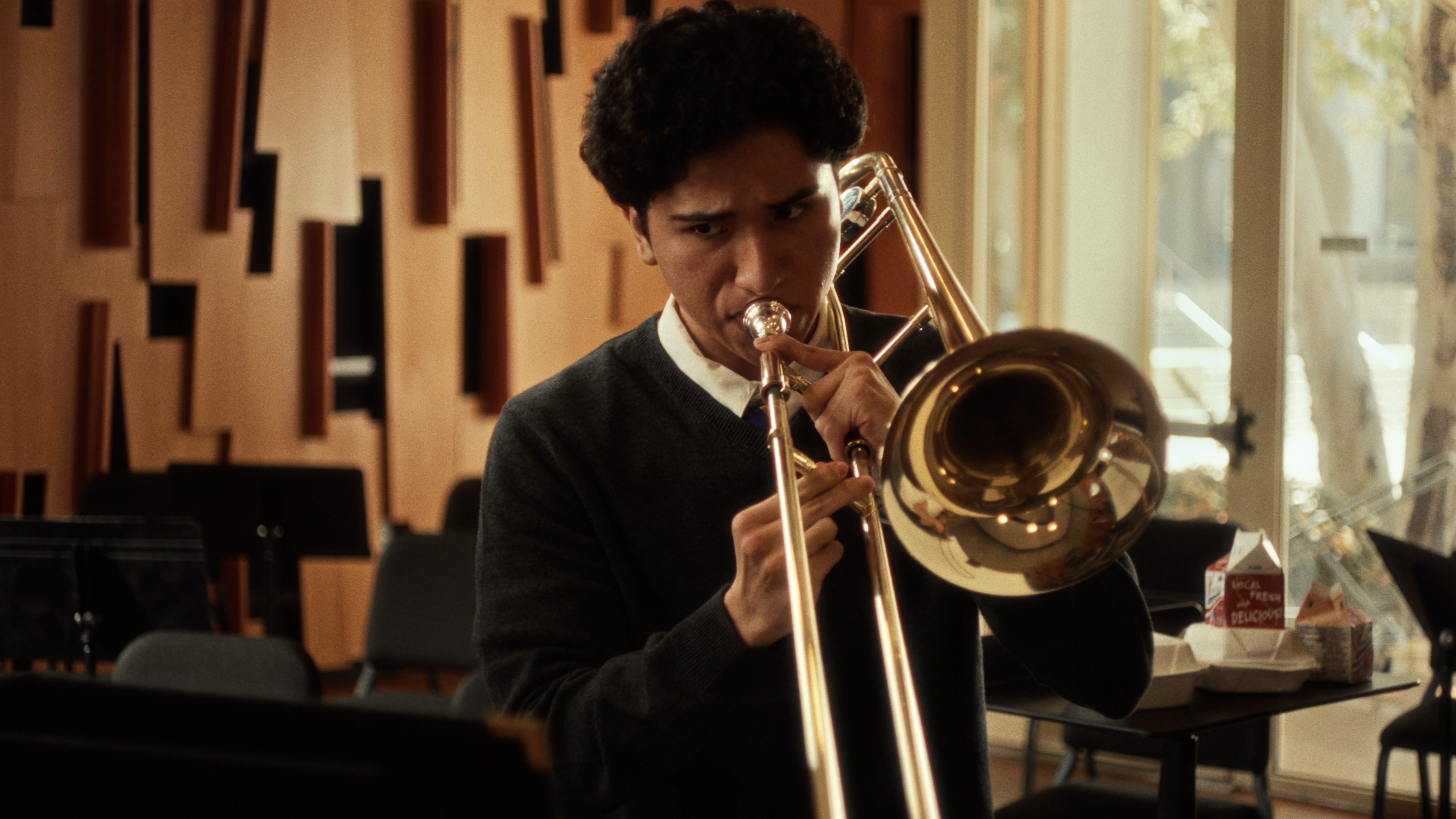
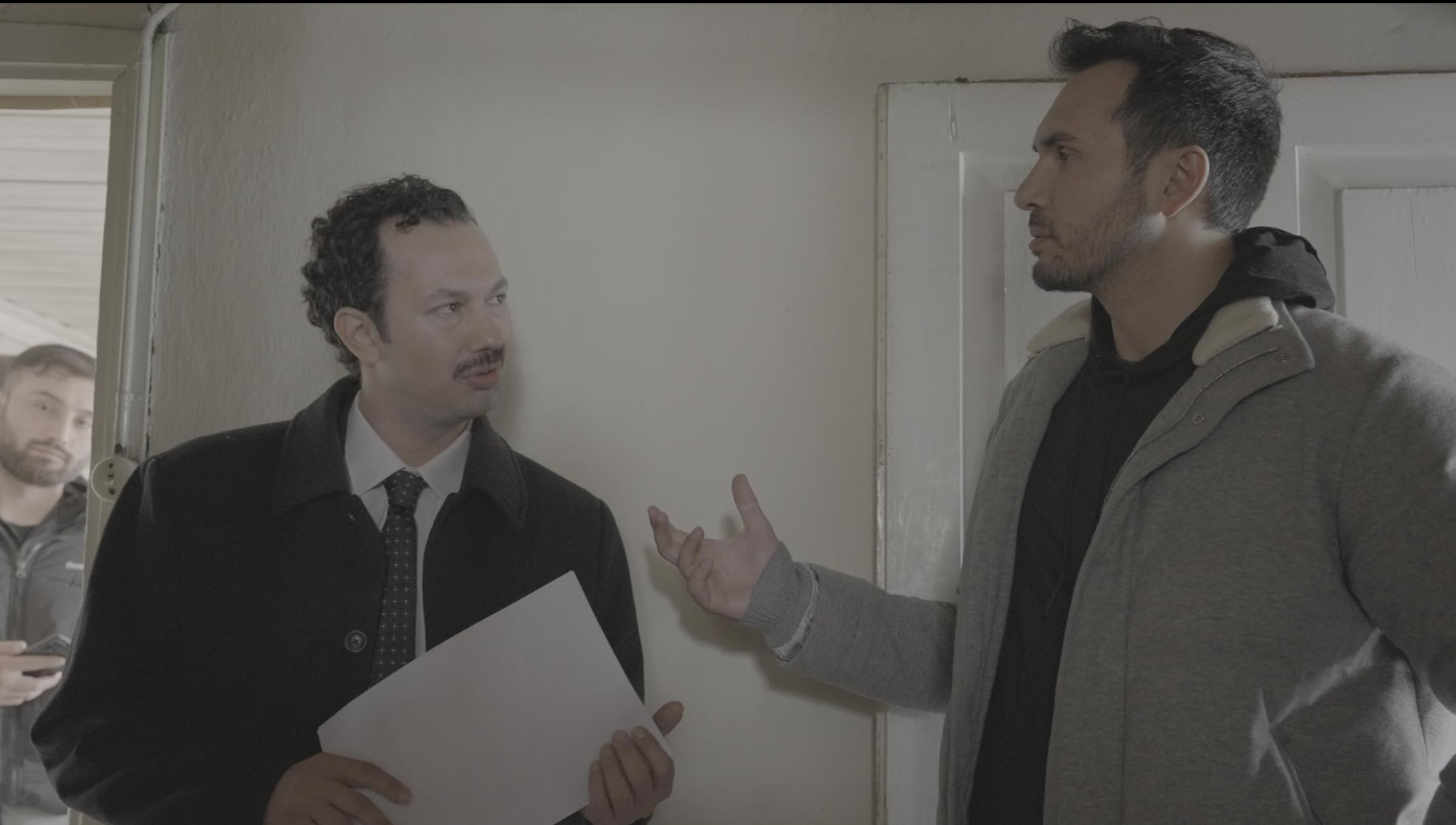
His Oscar-qualified short film, THE WITNESS, takes place during a wedding celebration in a remote Turkish village. A young teacher named Ramazan arrives expecting an ordinary gathering, but gradually discovers that something deeply troubling is taking place inside the family home. At the centre of the celebration is Ayşe, a young bride whose circumstances reveal the reality behind what should be a joyful occasion.
It is a story about child marriage, but Kumova is interested in something that extends beyond the immediate injustice. Rather than telling the story exclusively through the experience of the young bride, he turns his attention towards the people around her: those who see what is happening, recognise that it is wrong, and must decide whether they are prepared to do anything about it.
“I think what interested me about this story was the idea of looking at child marriage from a slightly different perspective,” Kumova explains. “We have seen many films that focus on the young bride herself, her emotions, her suffering, and what she goes through. And those stories are very important. But I wanted to explore another side of the situation, which is the people around her. The people who see what is happening, who may understand that something is wrong, but still don’t necessarily do anything about it.”
That decision gives THE WITNESS its central moral dilemma. Ramazan enters the community as an outsider, gradually understanding the situation while also questioning his own position within it. His hesitation becomes the audience’s hesitation, forcing viewers to consider how they might behave when confronted with something they know is wrong.
“For me, the film is really about the moment when witnessing something becomes a personal responsibility,” Kumova says. “It’s easy to recognize that something is wrong, but it’s much harder to decide what to do when you’re actually in that situation.”
It is a question that reaches well beyond the subject of child marriage. As Kumova points out, we can all find ourselves witnessing injustice within our families, communities or society. The film’s intention is not simply to make audiences observe what happens to Ayşe, but to make them consider their own response.
“If they were in Ramazan’s position, how would they react?” he asks.

FINDING THE UNEASE BENEATH THE CELEBRATION
One of the most effective elements of THE WITNESS is the contrast between its setting and the reality gradually revealed within it. Weddings are associated with happiness, celebration and new beginnings. Here, those familiar associations become increasingly uncomfortable as the audience begins to understand what is happening.
Kumova deliberately avoids revealing everything at once. Instead, he allows the tension to develop through small observations, shifting behaviour and details that initially seem insignificant.
“I didn’t want to reveal everything to the audience immediately,” he explains. “I wanted them to discover things gradually, almost like putting together pieces of a puzzle. We used small details, people’s behaviour, their looks, and certain objects in the house to create a feeling that something wasn’t quite right.”
The approach places the audience alongside Ramazan. Just as he begins to question the circumstances surrounding the wedding, viewers are encouraged to notice the same details and form their own understanding.
“Sometimes what people don’t say is just as important as what they do say,” Kumova adds.
It is a considered approach to a difficult subject. Rather than relying on dialogue to explain the situation, the filmmaker trusts the audience to recognise the contradictions unfolding in front of them.
“The audience starts noticing these little things before they fully understand what they mean,” he says. “For me, the most important thing was to let the audience discover the truth for themselves, rather than explain everything through dialogue.”
That restraint is particularly important when dealing with a subject as serious as child marriage. Kumova understands that showing suffering directly is not necessarily the most powerful way to communicate its consequences. Sometimes, the normality surrounding an injustice can be more disturbing than the injustice itself.
“I think that when you’re dealing with a subject like this, showing the suffering directly is not always the most powerful way to communicate it,” he says. “Sometimes, seeing how normally everyone behaves around a situation that is deeply wrong can be even more disturbing.”

THE PEOPLE WHO LOOK THE OTHER WAY
While Ayşe is at the centre of the story, much of the film’s perspective is filtered through Ramazan and the people surrounding her. It is a deliberate choice, but one that required careful consideration.
Kumova was conscious of the danger of making Ayşe simply a device through which another character could explore his moral responsibilities.
“I didn’t want to make her just a character who exists to create a moral dilemma for someone else,” he explains. “Her situation is the reason the story exists in the first place.”
Instead, he wanted the audience to understand her circumstances through the reactions of those around her: the way they look at her, behave towards her and respond to what is happening.
“Sometimes, I think these reactions can tell us as much about a person’s situation as directly showing their suffering,” he says.
The same sensitivity informs his portrayal of the wider community. Kumova avoids turning the characters into straightforward villains, recognising that situations involving deeply embedded social practices are often more complicated than a simple division between good and bad.
“People grow up within certain environments, and sometimes things become so normalized around them that they stop questioning them,” he says. “Something that might seem obviously wrong to an outsider, may be accepted by the people who have lived with it for a long time. That doesn’t mean it makes the situation right. But I think it’s important to understand how these things continue to happen.”
Tradition, fear and family pressure all play a part. Some characters may be acting according to expectations they have never questioned, while others may be reluctant to challenge what is happening because they believe it is not their place.
Importantly, Kumova is not attempting to make a statement about an entire community or culture. His interest is in human behaviour and the way ordinary people can become part of something unjust without necessarily recognising their own complicity.
“I wanted to tell a specific story about human behaviour and what happens when people accept something without questioning it,” he says.

WHEN SILENCE BECOMES PART OF THE PROBLEM
Perhaps the most challenging idea in THE WITNESS is that silence can have consequences even when it does not come from agreement.
Ramazan’s hesitation is understandable. He is entering an unfamiliar environment, surrounded by people who appear to accept the situation. He does not know the relationships or dynamics within the family, and the prospect of intervening is considerably more complicated than judging events from a distance.
For Kumova, this distinction is central to the character.
“Understanding something is wrong and actually doing something about it are two very different things,” he says.
The filmmaker wanted to explore the uncomfortable gap between recognising injustice and finding the courage to challenge it. Fear, uncertainty and the pressure of being the only person questioning what is happening can all make intervention difficult.
“I think it’s one thing to judge a situation when you’re looking at it from the outside. It’s another thing when you’re actually standing in the middle of it, surrounded by people who seem to accept what’s happening.”
This is where the film’s title takes on its full significance. Being a witness might initially seem like a passive position, but Kumova questions whether remaining silent can ultimately produce the same result as actively accepting what is happening.
“I think one of the things I wanted to explore was the difference between staying silent because you agree with something and staying silent because you’re afraid to challenge it,” he explains. “I think those are two different things, but at the same time, both can lead to the same result.”
It is an uncomfortable distinction because it leaves room for understanding without necessarily offering an excuse.
“We can understand why someone might hesitate without necessarily agreeing with their decision to remain silent,” he says.
Rather than asking audiences to judge Ramazan from a comfortable distance, Kumova wants them to experience the same uncertainty. It is easy to believe we would always stand up for what is right when there are no consequences to consider. The reality can be very different when speaking out means challenging the people around us.
“At what point does our silence stop being just silence, and become part of the problem?” he asks.
TELLING A BIG STORY IN 14 MINUTES
At just 14 minutes, THE WITNESS tackles a subject with considerable emotional and social complexity. For Kumova, the challenge was not simply deciding how much information could fit into a short running time, but finding the perspective that would allow the story to resonate most strongly.
He wanted the audience to experience events as Ramazan does, gradually recognising the details that make him question his surroundings.
That meant allowing moments to breathe and resisting the temptation to explain everything. The audience needs time to observe the characters, interpret their behaviour and reach its own understanding.
“For me it wasn’t just about fitting the story into 14 minutes,” Kumova says. “It was about choosing the perspective that would make the audience think about the situation differently.”
It is an approach that reflects his wider intentions as a filmmaker. The aim is not to provide every answer or dictate precisely how viewers should feel. Instead, he wants to create the conditions for an audience to question what it is seeing and consider its own position.

THE OSCAR JOURNEY
Now Oscar-qualified for consideration for the 99th Academy Awards®, THE WITNESS is bringing Kumova’s story to a wider international audience.
The film has been selected for several international festivals, including the Tirana International Film Festival and Izmir International Short Film Festival.
For a film rooted in a particular social reality, its journey beyond Turkey offers an opportunity to bring its central questions to viewers from different backgrounds and experiences.
Yet Kumova’s hopes for the film extend beyond its subject or awards prospects. He is interested in what happens when audiences leave the screening and find themselves thinking about situations in their own lives.
He does not expect everyone to arrive at the same conclusion, nor does he want to supply a definitive answer to the dilemma he has created.
“I think most people believe they would do the right thing in that situation,” he says. “But it’s easy to have that belief when you’re not the person who has to make the decision.”
For Kumova, the question ultimately extends to any situation in which someone witnesses another person being treated unfairly. It is not limited to child marriage, nor to the particular community depicted in the film.
“I don’t expect everyone to leave the film with the same answer, nor do I want to give the audience my answer,” he says. “I only want the audience to ask themselves this question and have their own answer.”
It is a fitting ambition for a film called THE WITNESS. Its most important confrontation may not be the one taking place inside the family home, but the one it creates between the audience and its own sense of responsibility.
Kumova has made a film about the consequences of looking away. Its final challenge is to make sure we do not do the same.
Brian Cotter