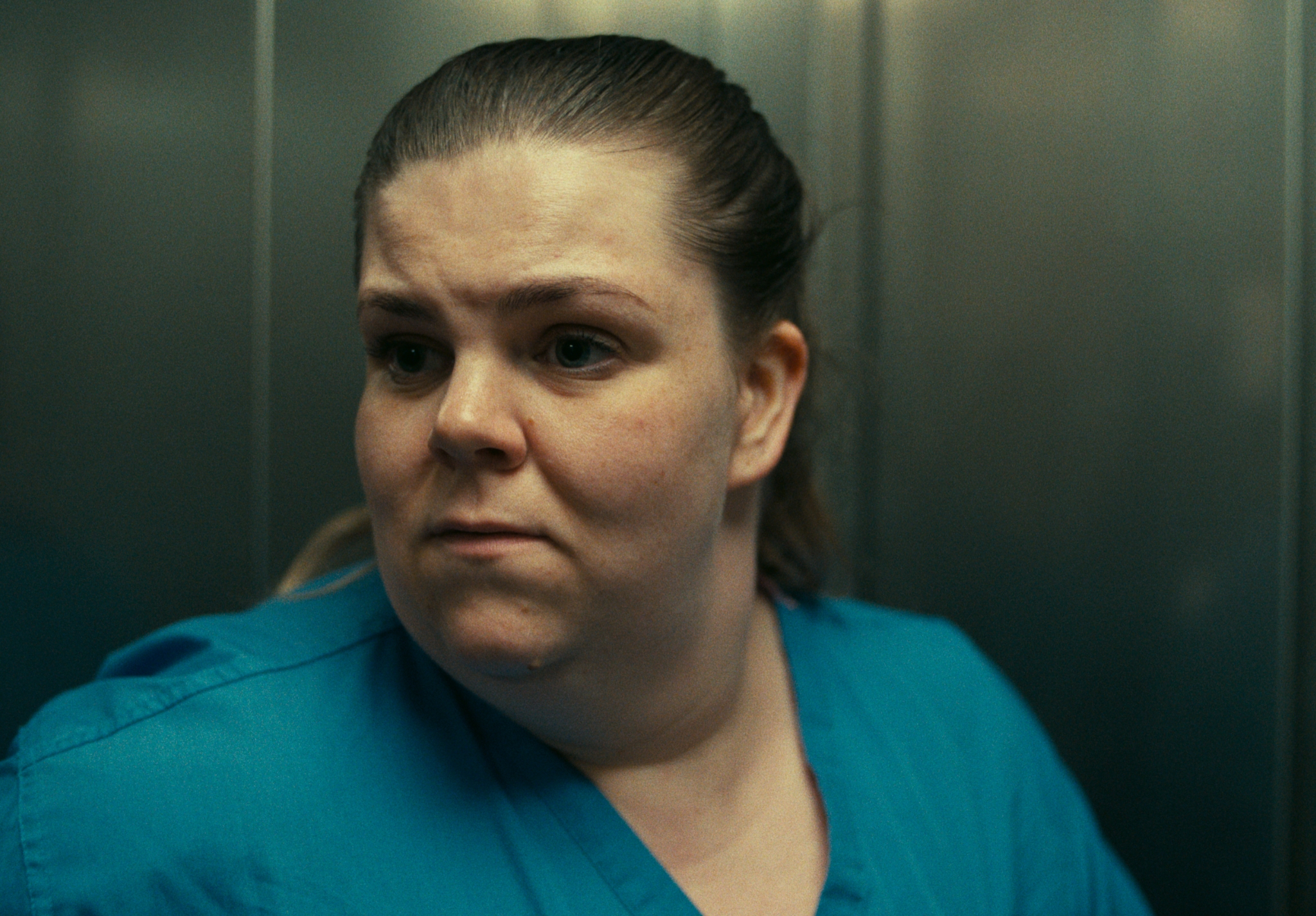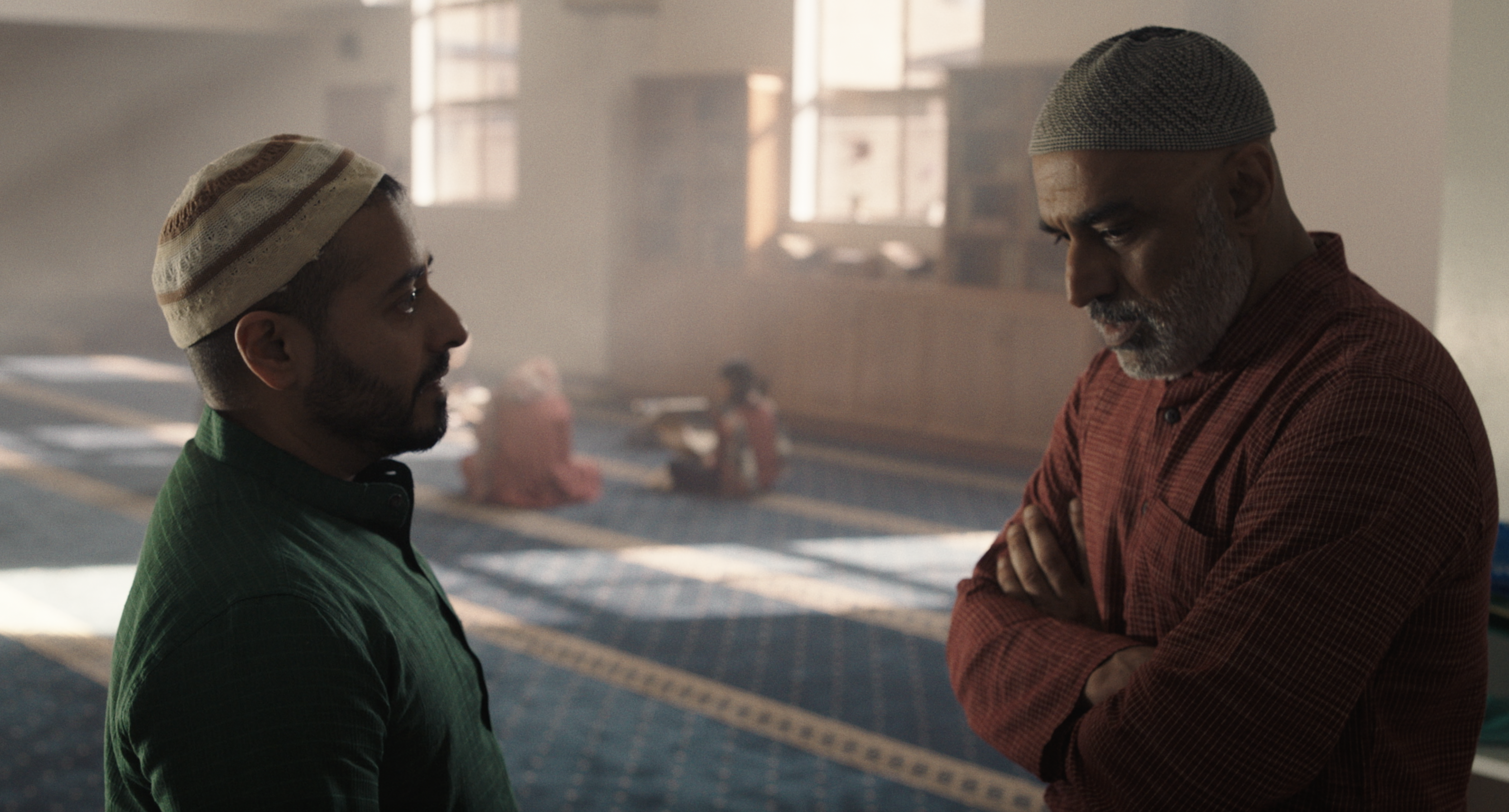
The emotional power of WITNESS often lies in what’s not said. What guided your decision to use stillness and restraint as central storytelling tools?
The emotional power of WITNESS lives in its quiet tension—because for many queer and trans people within faith communities, silence is often where the deepest conflicts reside. We chose stillness and restraint as storytelling tools to reflect the real-life experience of navigating sacred spaces where visibility can feel dangerous, and acceptance is never guaranteed.
Rather than dramatize or externalize every emotion, we leaned into subtext and nuance. Guided by our belief that audiences lean in more when a story whispers rather than shouts, we wanted viewers to feel the weight of what isn’t said—the pauses, glances, hesitations—just as much as what is spoken.
This approach was a collective effort. Our cinematographer Nausheen Dadabhoy used light and shadow to mirror the imam’s internal struggle. Our composer Omar El-Deeb crafted a score that layered tension without overwhelming it. And in performance, we encouraged restraint—trusting that the quietest moments could hold the most meaning.
Stillness, for us, wasn’t emptiness. It was reverence. It was space for reflection, discomfort, and ultimately, transformation.
The film is powered by some excellent performances. What was your casting process like, and what kinds of conversations did you have with the actors to help them inhabit their roles with emotional precision?
The casting process for WITNESS was thoughtful and deeply collaborative. It was essential for us to cast authentically, especially for the role of Shams. We were grateful to cast Shaan Dasani, a trans actor and personal friend of Radha’s, whose own experiences with faith and spiritual reckoning made him the perfect fit. Both Saif and Radha felt his presence brought honesty and emotional weight to the role.
Our casting director, Keertana Sastry, was also instrumental in helping us land Faran Tahir as Imam Mustafa. A respected Pakistani actor known for Iron Man and Star Trek, Faran brought a deep understanding of the cultural and spiritual stakes at play, grounding the imam’s internal struggle with compassion and complexity.
Drawing on her experience directing short films, Radha approached each actor with a tailored process—adjusting emotional tone, using action verbs to shape intention, and meeting performers where they worked best. Paired with Saif’s intimate connection to the story and his deep understanding of Muslim faith and ritual, their collaboration created a foundation for performances that felt both culturally authentic and emotionally resonant. From the first table read to rehearsals centered on prayer and ablution, Radha and Saif emphasized grounding every moment in lived experience and emotional truth, allowing the cast to deliver nuanced, deeply human portrayals.
Were there any particular filmmakers, artists or visual references that influenced the aesthetic or creative tone of WITNESS?
The aesthetic and creative tone of WITNESS was shaped by a mix of cinematic inspiration and deeply personal visual references. We were influenced by the powerful performances of Faran Tahir in his past work, as well as the emotionally grounded characters often portrayed by Riz Ahmed. For visual inspiration, we looked to Polite Society for its bold, vibrant cinematography—particularly in how it celebrates skin tones and cultural textures with intention and care.
However, some of our most meaningful references came from real life. We drew from personal photographs of our principal team members in their own sacred spaces—mosques, prayer rooms, and moments of communal worship. These images guided our approach to color, framing, and design. We intentionally embraced bold, expressive costuming to reflect individuality within faith, and ensured that our cinematography, led by Nausheen Dadabhoy, was crafted to honor the richness of our cast’s skin tones and the emotional intimacy of the story.

How did you want audiences to feel toward the imam by the end – changed, conflicted, moved or perhaps a combination?
By the end of WITNESS, we wanted audiences to feel that the imam is open—not fully transformed, but taking the first, tentative step toward understanding. His call to Shams isn’t a resolution; it’s an invitation. It signals the beginning of a conversation, a crack in the rigidity of tradition where empathy might begin to grow.
We weren’t aiming for a dramatic reversal, but rather a quiet shift—a moment of emotional honesty that could lead to something deeper. That’s the heart of this film: not preaching answers, but opening space for dialogue. Because we believe that once conversation begins, empathy follows. And from empathy, acceptance becomes not just possible, but inevitable.
In that way, the imam’s journey mirrors what we hope for our audience: not immediate transformation, but curiosity, courage, and a willingness to listen.
Did you encounter any challenges in distilling such a complex and emotionally nuanced story into a short runtime? How did editing choices balance condensing the narrative whilst preserving the subtlety and depth of the performances?
Distilling such a complex and emotionally layered story into a short runtime was certainly a challenge—but one we approached with care, flexibility, and deep trust in our team. Our editor, Joseph Murphy—a frequent and trusted collaborator of Radha’s—was truly the ideal partner for this process. His openness to experimentation allowed us to explore every possibility: elongating moments of silence, tightening scenes without losing emotional clarity, and constantly recalibrating to ensure the heart of the story remained intact.
Together, we focused on preserving the subtlety and depth of the performances, especially in scenes where stillness carried as much weight as dialogue. Joseph’s sensitivity to pacing helped strike that delicate balance—never rushing a beat, but never lingering so long that it dulled the emotional impact.
Though the final film came in under 15 minutes—a helpful threshold for festival consideration—we never edited toward a specific time constraint. Our priority was always to let the story breathe, to honor its quiet power, and to trust that the right length would reveal itself in service of the narrative.
In the end, we believe the film feels both complete and resonant—not in spite of its brevity, but because every frame was shaped with intention.
What kinds of conversations do you hope WITNESS will spark — within faith communities, queer and trans spaces, or even between people who rarely engage across those lines?
We hope WITNESS sparks conversations rooted in empathy, nuance, and the courage to sit with discomfort. Within faith communities, we want the film to open space for dialogue around inclusion—especially for queer and trans individuals who have long been pushed to the margins. It’s not about offering answers, but about asking: Can we hold space for someone’s humanity, even when it challenges tradition?
For queer and trans audiences, particularly those with ties to religion, we hope the film affirms that their spiritual belonging is not conditional. That they are not alone in navigating the intersection of faith and identity.
And for those who rarely engage across these lines, WITNESS offers a starting point—a quiet but urgent invitation to listen. To recognize that change doesn’t always come in grand declarations, but often begins in small, courageous acts: a phone call, a conversation, a willingness to see someone fully.Ultimately, we hope WITNESS becomes a bridge—between generations, beliefs, and lived experiences.