Wesley Wang’s animated short uses a surreal world of rabbits, carrots and factory robberies to explore inequality, scarcity and what happens when the “little guys” are pushed too far
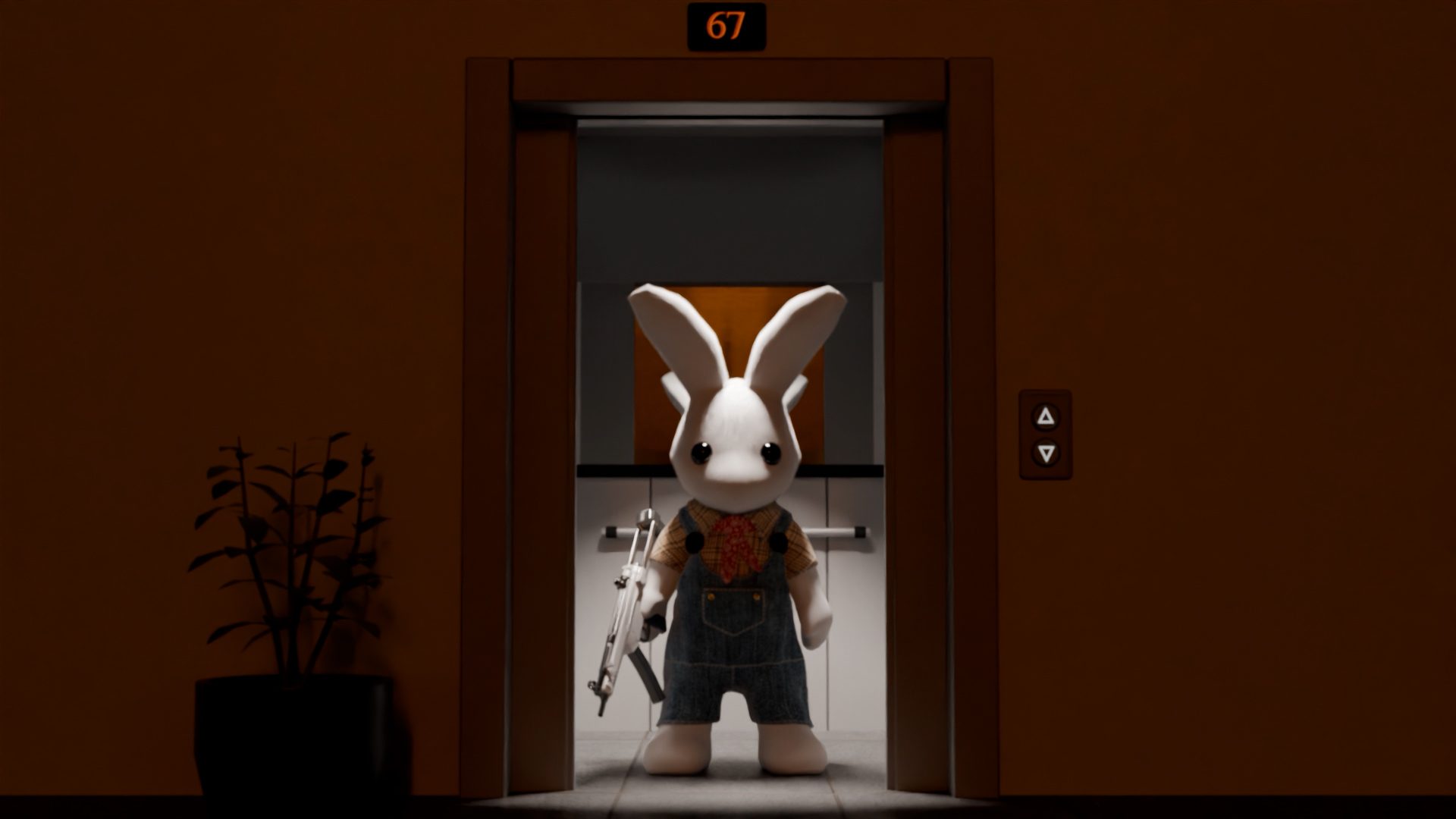
What begins with rabbits robbing factories to reclaim the world’s carrot supply becomes something considerably more pointed in Wesley Wang’s Oscar®-qualifying animated short Violet and Marlowe Rob a Bank. Beneath its surreal premise, irreverent humour and high-energy heist sequences, the film explores power, inequality, scarcity and resistance through the story of a married couple caught in an increasingly oppressive system.

For Wang, the decision to tell that story through rabbits and carrots was deliberate. “Sometimes the most abstract and surreal concepts are the most true,” he explains. By removing the audience’s immediate assumptions about who might be right or wrong, the film can approach its themes through humour before revealing their deeper implications.
“Because it’s funny and strange, people let their guard down,” Wang says, “so by the time they realize what it’s really about, they already care.”

At the centre of the film are Violet and Marlowe, whose marriage gives the larger conflict its emotional centre. They are not simply partners in a series of increasingly ambitious heists. Their relationship allows Wang to ground the film’s broader questions about government power and inequality in something recognisably human: two people trying to determine how far they are willing to go to protect one another and pursue what they believe is right.
“I’ve found that grand concepts and themes often feel too lofty when they aren’t grounded in personal relationships and relatable human connection,” Wang says. The film therefore explores both the conflict between “the little guys and the government” and the uncertainty among those resisting the system over how far they should go in pursuit of justice.

That tension is embodied by President Rabbit, whose control of the global carrot supply offers an exaggerated vision of scarcity and concentrated power. Wang’s approach was to make the world absurd without making its stakes absurd.
“I think the idea was to make the world ridiculous but never the stakes,” he says. The rabbits are genuinely hungry, while President Rabbit genuinely believes he deserves the resources he controls. The exaggeration ultimately makes the premise feel less distant rather than more.

“One rabbit owning every carrot on earth is funny for a second, and then it starts to feel uncomfortably familiar.”
The film’s visual language reinforces that balance between comedy and genuine stakes. Violet and Marlowe move through the world with a deliberately physical, expressive quality influenced by stop-motion animation. While developing the film in Blender, Wang looked to Pingu and Wallace & Gromit as references for the tactile quality and movement he wanted to bring to the characters.

That influence is particularly evident in the factory heists, which initially play as comic action sequences before taking on a larger significance. For Wang, the robberies were always acts of resistance, with Violet and Marlowe forced to continue as government suppression becomes increasingly severe.
The political and personal strands of the film, however, remain inseparable.
“I never really thought of them as separate,” Wang says. “Violet and Marlowe don’t care about the system in the abstract, they care about each other, and the system just happens to be what’s in the way.”

That relationship was also central to maintaining the film’s emotional weight. While the premise and action can be played for laughs, Wang was conscious that Violet and Marlowe themselves could not simply become comic devices.
“It was everything,” he says. “If Violet and Marlowe were just punchlines, you’d laugh for a few minutes and then stop caring whether they win.”
Instead, the humour becomes a way into the film’s more serious ideas. The audience may initially be watching rabbits steal carrots from factories, but the absurdity gradually gives way to questions about autonomy, power and the point at which resistance becomes unavoidable.

For Wang, that was always the destination. Beneath the animation, the action and the deliberately ridiculous premise, Violet and Marlowe Rob a Bank is ultimately about what happens when those with the least power are pushed beyond what they are prepared to accept.
“It was never really about carrots,” Wang says. “Rather an exploration of what happens when the little guys are pushed too far beyond what is acceptable.”