Saoirse Ronan steps behind the camera with Paper Plane, an intimate and emotionally perceptive short film about childhood, family and the moment a child begins to understand that sometimes loving someone also means protecting yourself from them.
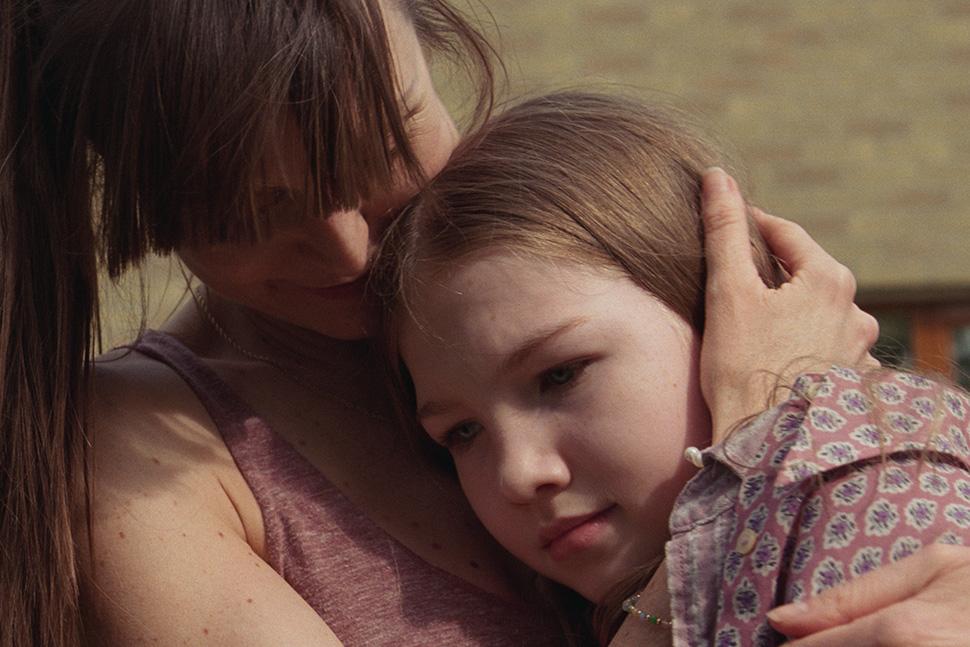
Written and directed by the four-time Academy Award nominee, the 15-minute film centres on Fay, a defiant young girl who refuses to return home while her father remains there. Instead of confronting her family directly, she stages her own silent protest, communicating through paper planes and leaving her mother with an agonising choice: follow her daughter or stay behind and let her go.
It is a deceptively simple premise that carries considerable emotional weight.
Ronan has described Paper Plane as “a love letter to a younger version of myself, and a younger version of my mother,” and that deeply personal starting point can be felt in the sensitivity of the storytelling.
Rather than attempting to explain every fracture within this family, Paper Plane focuses on what those fractures feel like through the eyes of a child. Fay cannot control the adults around her, but she can control whether she walks back through the door.
The paper plane itself becomes an affecting metaphor. Something normally associated with childhood play takes on another purpose: a means of communication when speaking has become too difficult. It represents innocence, but also the connection between a mother and daughter who love one another deeply yet cannot quite reach each other.
At the centre of the film is young Martha Malone as Fay, alongside Clare Dunne as her mother and Tim Creed as her father. Malone is entrusted with a character whose emotions cannot simply be explained through dialogue, while Dunne brings the perspective of a mother caught between competing forms of love, responsibility and self-preservation.
There is impressive filmmaking pedigree behind the camera too. Cinematographer Kate McCullough, whose credits include Normal People and the Oscar-nominated The Quiet Girl, brings her considerable visual storytelling experience to Ronan’s debut. The film is edited by IFTA-winning editor Nathan Nugent, whose credits include Room and Normal People.
But what makes Paper Plane particularly interesting as a directorial debut is Ronan’s decision to begin small.
There is no attempt to announce herself as a filmmaker through scale or spectacle. Instead, she has chosen a personal story built around emotional observation: the complicated relationship between a mother and daughter, the damage children absorb from the adults they love, and the survival instincts that can develop long before a child has the language to understand them.
Ronan’s director’s statement explains that she wanted to explore “how a young mind tries to make sense of something beyond their control” and how self-preservation can emerge from watching someone you love struggle to love themselves and others healthily. That idea gives Paper Plane its emotional foundation.
It also makes the film about more than one troubled family. There is something painfully universal in its central question: what happens when a child realises that the adults who are supposed to provide safety cannot always provide it?
For an actor so closely associated with emotionally complex performances, it perhaps shouldn’t be surprising that Ronan’s first work as a writer-director should be so concerned with what characters struggle to say.
Paper Plane suggests a filmmaker interested in restraint, performance and the emotional spaces between people.
It is a tender, quietly painful and deeply personal debut — and an intriguing indication of where Saoirse Ronan might go next as a filmmaker.
VERDICT
Paper Plane is a beautifully conceived exploration of childhood, maternal love and self-preservation. Saoirse Ronan’s intimate directorial debut understands that some of the most difficult family conversations are the ones that never quite get spoken.
Michael Gibbens